Last updated November 18, 2026
ADU Builders Warning Signs Every Homeowner Should Know
Nevada requires ADU contractors to be licensed, but a license only means they passed a test. It says nothing about whether they’ll give you a written price, pull permits before breaking ground, or still return your calls after the final draw clears. That’s the gap most homeowners miss. In Sunrise Manor, where lot sizes make backyard units genuinely feasible and the summer heat pushes every schedule to its limit, the contractor who creates the worst experience is often the one with a license on the wall and nothing else in order: no written scope, no warranty language, and a habit of collecting draws ahead of completed work. This guide walks through the warning signs that actually predict trouble, and how to read them before you sign.
Quick Answer
The ADU contractors most likely to cause problems in Sunrise Manor aren’t the unlicensed ones, which are easy to screen. They’re contractors who have a license but no written scope of work, who collect draw payments ahead of completed milestones, and who won’t name their electrical and plumbing subcontractors before contract signing. A contractor who provides a written price, delays demolition until permits are approved, and puts warranty terms in a specific document is usually a safe hire, regardless of how polished the sales pitch is.
Table of Contents
- Two Kinds of Red Flags: Which Matters More?
- The Vague Contract Problem
- Permit Timing: The “Start Demo First” Warning
- Why Subcontractor Disclosure Matters
- Reading a Draw Schedule Before You Sign
- What a Real Warranty Document Contains
- Reference Questions That Actually Surface Problems
- Sunrise Manor-Specific Concerns
Two Kinds of Red Flags: Which Matters More?
Most homeowner checklists focus on the easy stuff. Is the contractor licensed with the Nevada State Contractors Board? Do they carry general liability insurance and workers’ comp? You can verify both in about fifteen minutes online, and you should. But those checks screen out maybe half the bad actors, and not the half that costs you the most money.
The behavioral red flags require reading, not Googling. They show up in how a contractor talks about written scope, how they structure payment, and whether they’ll put specifics in writing or prefer to “work things out as we go.” In our experience building ADUs across Sunrise Manor, the projects that go sideways almost always had a behavioral warning sign at the pre-contract stage that the homeowner noticed and talked themselves out of.
Here’s the split:
- Easy-to-check red flags: no license, lapsed insurance, no physical business address, no verifiable references. Verify these, but they’re table stakes.
- Behavioral red flags: verbal-only change orders, front-loaded draw schedules, no written scope attached to the contract, refusal to name subs, vague warranty language, pressure to “start demo” before permits issue.
If you’re just beginning your search, the guide on ADU builders in Sunrise Manor covers the licensing check and the basic qualifications to look for. This article goes deeper into the behavioral signs that screening a license won’t catch.
The Vague Contract Problem
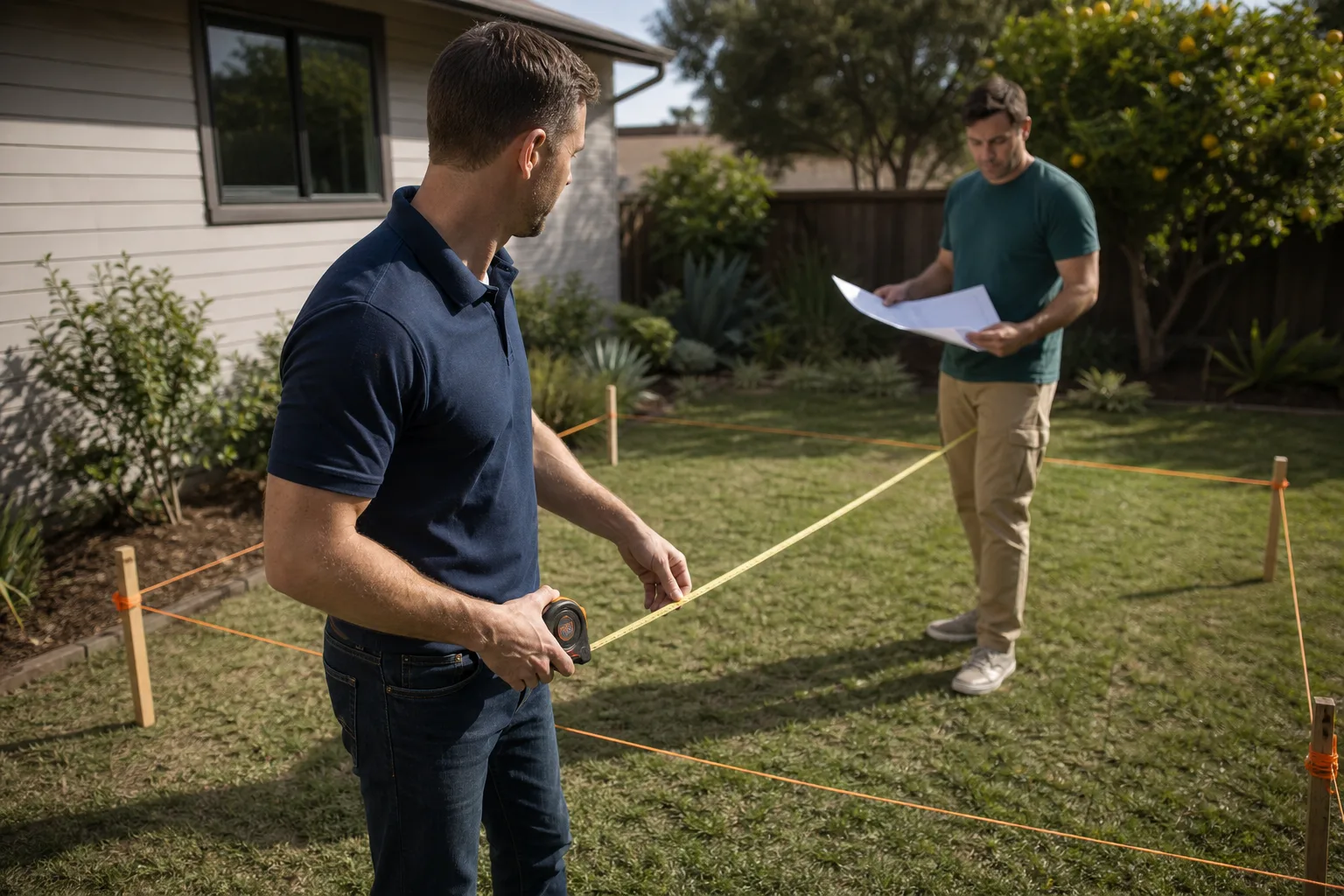
A contract that says “construct a detached ADU per plans” is not a scope of work. It’s a promise to figure it out later. A real ADU contract in Sunrise Manor should be specific enough that you could hand it to a different contractor and they’d know exactly what’s included and what isn’t.
Here’s what a written scope should list explicitly:
- Dimensions and square footage of the unit, including any covered porch or storage
- Foundation type and specifications (slab, pier, or specific prefab system)
- Exterior finish materials by brand and color, e.g. James Hardie siding product line
- Roof system and insulation values (important in a Sunrise Manor summer, where attic temperatures regularly exceed 140°F)
- Electrical service size and panel location; whether the ADU shares the main service or gets a separate meter
- Plumbing fixtures and water heater type by specification
- HVAC system and whether it’s separate from the main house
- Interior finishes: flooring, cabinets, countertops, paint
- Site work: grading, drainage, utility trenching, and landscaping impact
- Explicit list of exclusions (fencing, appliances, landscaping beyond bare grade)
The change-order problem is a cousin of the vague contract. A contractor who says “we’ll handle change orders verbally, no need for paperwork” is setting up a situation where you can’t prove what you agreed to. Every change, even a $200 one, should run through a written change order with a price and a new schedule impact noted.
The payoff of a written price before work starts isn’t bureaucratic. It’s the difference between knowing your total on day one and discovering it at framing when the “allowed” allowance for cabinets ran out. Families plan their finances around a written number. Ask for that in writing, and treat reluctance to provide it as a serious signal.
Permit Timing: The “Start Demo First” Warning
If a contractor suggests breaking ground, pouring a foundation, or demolishing a garage before permits are formally approved, walk away. That’s not a scheduling shortcut, it’s a risk transfer. The permit becomes your problem the moment an inspector shows up and finds unpermitted work underway on a property in your name.
- Permits issued first, always. A legitimate contractor files plans with Clark County, waits for approval, and does not schedule demolition until the permit is in hand. “We can start demo while the permit is in review” is a reason to find another ADU builder.
- Permit drawings should match the contract drawings. Redraws happen, but the scope on the permit should align with what you’re paying for. If they don’t match, ask why before signing.
- The permit should be pulled in the contractor’s name (or the licensed contractor’s business name), not yours alone. This matters if there’s ever a problem with the work.
- Inspection schedule should be on the written timeline. A contractor who can explain the rough framing inspection, final inspection, and utility sign-off sequence in writing has done this before.
We’ve seen homeowners in Sunrise Manor whose “quick start” allowed a contractor to demo a garage before the ADU plans were approved, and then the permit application was denied. The homeowner ended up paying twice for demolition and losing months to the permit process. The cost wasn’t in the demo bill. It was in the lost time and the second permit cycle.
If your project involves converting an attached garage rather than building from scratch, the permit sequence is different and worth reading about on the garage conversion contractor in Sunrise Manor page.
Why Subcontractor Disclosure Matters
Most general contractors work with subcontractors for the electrical, plumbing, and HVAC trades. That’s normal and fine. What isn’t fine is a contractor who can’t or won’t tell you who those subs are before you sign.
Ask this specific question: “Who are your electrical and plumbing subs, and are they licensed with the state?” A professional will name them, confirm their licenses, and give you the ability to verify. An evasive answer, or “we’ll figure that out when we get there,” is a signal that subs are being selected on price and availability at the moment they’re needed, not on qualified relationships built over years.
Why this matters in practice:
- Subs chosen on price alone cut corners on rough-in work that gets covered by drywall and only shows up as a problem later (leaky showers, undersized panels, failed inspections)
- If a sub is unlicensed and gets hurt on your property, the liability exposure can land on you
- Trades rotating mid-project with different subs creates inspection delays and rework
- Warranty coverage usually passes through the GC, and if the GC can’t name the sub, they can’t call them back for warranty work
The reverse is also true. Contractors who name their subs up front usually have long-standing working relationships, which means faster inspection responses, more consistent quality, and better warranty follow-through. Ask the question and watch how they answer. It tells you more than a reference list.
Reading a Draw Schedule Before You Sign
Draw schedules are where the money conversation happens, and where more projects fail than anywhere else. A draw is a scheduled payment tied to a completed milestone. The standard for ADU construction should be payment-for-completed-work, not payment-for-work-about-to-start.
Here’s a draw schedule pattern that protects you:
- Deposit: a reasonable percentage (usually 10-15%) at signing, to cover permit filing and drawings
- Foundation/rough-in draw: released after foundation inspection passes
- Framing and sheathing draw: released after framing inspection passes
- MEP rough-in draw (mechanical, electrical, plumbing): released after rough-in inspection passes
- Drywall and finishes draw: released at multiple checkpoints, not one lump sum
- Final draw: released at final inspection and your walkthrough, with punch list complete
Front-loaded schedules put 30-40% or more of the total in the first draw. That means the contractor has most of your money before they’ve done most of the work. If they walk, or if the project stalls, your leverage is gone.
Ask what happens to the final 10% if the punch list isn’t complete. A contractor who releases the final draw only after walkthrough and punch list gives you real leverage. One who wants 30% at framing has shifted the project risk onto you.
Related reading: the home addition contractor in Sunrise Manor page covers similar draw-schedule logic for additions, which follow the same payment-vs-milestone principle.
What a Real Warranty Document Contains
“We stand behind our work” is a sentence, not a warranty. Every ADU contractor in Sunrise Manor will say some version of it. The question is whether they’ll put specifics in writing, on their letterhead, before you sign.
A real warranty document should name the following:
- What’s covered: specific systems and components (roof, foundation, plumbing, electrical, HVAC, structural, finish work)
- Duration for each: workmanship warranties are typically 1 year, structural coverage sometimes longer, appliance and equipment warranties often come from the manufacturer. Ask for the schedule in writing.
- What voids it: unauthorized modifications, failure to maintain, water intrusion from neglected grading, owner-installed electrical changes. A warranty without exclusions is not written by anyone serious.
- How to file a claim and expected response time: a real warranty document names a phone number, a process, and a reasonable response window.
- Who actually performs the warranty work: the GC’s own crew? The sub? A specified third party? This matters if you have a plumbing leak 8 months out and need someone on-site with a reasonable turnaround.
The 365-Day Done Right Promise is the standard we work with: if an ADU, garage conversion, or home addition isn’t done right, it gets made right. Every project is covered, in writing, by that document. That’s not a distinguishing claim because it’s unusual phrasing, it’s a distinguishing claim because it’s specific and it’s in writing.
If a contractor offers only a verbal warranty, ask for the written version. If they don’t have one, that answers your question.
Reference Questions That Actually Surface Problems
“Were you happy with the work?” is a useless question. Every contractor’s reference list is curated to answer that question well. Ask harder questions, ones that require memory of a problem and its resolution.
Here are the questions worth asking:
- Did you ever have a post-move-in issue, and did they come back for it? This surfaces warranty performance directly.
- How fast did they come back when you called? If the answer is “within a week,” that’s reasonable. If it’s “I had to chase them for weeks,” you’ve learned the real warranty response time.
- Was the final price close to the original written price? This is the vagueness test in disguise. Specific reference answers here are worth more than any brochure.
- Did you ever want to change something mid-project? How did they handle the change order? If the reference can’t remember the change-order process, ask what they paid extra for and whether they saw the paperwork.
- Was anyone around during construction you didn’t want in your home? This is a family-safety question that matters if you have kids or pets.
- If you had it to do over, would you use them again? Straightforward, useful.
Ask for three references and ask them these questions. One glowing reference is not enough. Two of three, with specific answers to the harder questions, is a real signal.
The other way to spot check is to ask the reference whether the finish photos they saw before signing were from actual projects the contractor built. Ask to see before-and-after photos of the same project, and see if you can verify location or context.
Sunrise Manor-Specific Concerns
A few things specific to building ADUs in Sunrise Manor that a contractor’s portfolio should reflect:
- Summer heat schedule shifts. Concrete pours and roofing need to happen before the peak daytime heat, or at dusk. A contractor whose portfolio shows work in cooler climates may underestimate the schedule impact of a July framing cycle in Sunrise Manor.
- Prefab models and lot access. Detached ADUs built from prefab units (Plant Prefab, Tuff Shed, and similar modular approaches) need crane access, street permits, and utility clearance. Not every lot in Sunrise Manor has the clearance a prefab unit needs. A contractor should know how to assess that before you commit to a specific unit.
- Older housing stock and utility upgrades. Many Sunrise Manor homes were built in the 1970s-1990s, and adding an ADU often means upgrading the main electrical panel to 200A or adding a dedicated service. Confirm the contractor knows to check this before submitting plans.
- Drainage and grading. Summer monsoon runoff can overwhelm grading if it’s not handled correctly. A foundation plan without explicit drainage should get a question from you.
- Permit familiarity with Clark County. Ask how many Clark County ADU permits they’ve had approved in the last two years and request examples of recent approvals if they can share.
If your lot has access constraints or a smaller footprint, the Seedling ADU Builders Sunrise Manor home page outlines how we approach those situations, and the crew experience (up to 25 years) that comes with it.
Common Mistakes to Avoid
- Signing a contract with no written scope attached. If the scope of work is only described in a sales presentation and not attached to the contract, it doesn’t exist. Get a written scope detailed enough to check against the finished build.
- Accepting a front-loaded draw schedule because the deposit “sounds normal.” A 30%+ first draw before foundation work starts leaves you with no leverage. Insist on payment tied to completed milestones.
- Believing “we’ll start demo first, permits will catch up.” Unpermitted demolition exposes you to removal orders, fines, and doubled permit costs. No exceptions in Sunrise Manor or anywhere else in Clark County.
- Not asking who the electrical and plumbing subs are. A contractor who won’t name them before signing is usually planning to use whoever is free that week. Ask before you sign.
- Accepting a verbal warranty. “We stand behind our work” is not a warranty you can enforce. Ask for specifics in writing: what’s covered, for how long, and what voids it.
- Comparing only on total price. Two quotes for a Sunrise Manor ADU might differ by $15,000 and the cheaper one might be missing foundation drainage, panel upgrade, or landscaping restoration. Compare line items, not bottom lines.
- Skipping site visits from reference customers. If a contractor can’t put you in touch with a customer who’s willing to show you the completed ADU in person, take that as a signal.
When to Call a Professional
If you’ve read this far and you’re already working with a contractor but haven’t signed, this is the exact moment to slow down and get clarity. If you’re still selecting, the right question isn’t “who’s cheapest” but “who will put the full scope, draw schedule, and warranty in writing before I commit.” If you’ve already signed and are now seeing behavioral red flags in the build phase (verbal change orders, missed inspection milestones, no warranty document in hand), it’s worth a professional conversation before things compound.
Seedling ADU Builders Sunrise Manor offers free estimates in Sunrise Manor – call (888) 419-5282. We’ll walk through your lot, assess what’s feasible, and give you a written price before any work is scheduled. You can also read more about how we approach the full range of options across home additions, garage conversions, and ADU builds in Sunrise Manor to understand the full picture.
Frequently Asked Questions

The biggest red flag is a contractor who won’t put the scope of work, draw schedule, and warranty in writing before you sign. A license is a starting point, but the written specifics are what protect you when something goes wrong mid-project. If they say “we’ll work out the details as we go,” find another contractor.
Yes. An ADU in Sunrise Manor requires permits from Clark County before any construction begins, including demolition of an existing garage if you’re converting. A contractor who starts demo or foundation work before the permit is approved is creating a problem you’ll have to correct. Call (888) 419-5282 to talk through what your specific lot requires – the estimate is free.
A reasonable draw schedule ties each payment to a completed, inspected milestone – foundation, framing, MEP rough-in, drywall and finishes, and final walkthrough. Front-loaded schedules that put 30-40% of the total in the first draw leave you with no leverage if the project stalls. Ask for the draw schedule in writing and compare it to what’s been completed before each payment.
Ask specific questions, not general ones. Ask whether they had any post-move-in issues and how fast the contractor came back for them. Ask whether the final price matched the written price, and how change orders were handled. Ask if they’d hire the contractor again. Three references with specific answers to these questions are worth more than a list of general praise.
A real warranty document names the systems covered (foundation, roof, electrical, plumbing, HVAC, finishes), a duration for each, the exclusions that void it, and a process for filing a claim. A verbal “we stand behind our work” is not a warranty. Ask for the written warranty document before signing. Every Seedling ADU Builders project is covered in writing by the 365-Day Done Right Promise.
Most detached ADUs in Sunrise Manor run 6-9 months from permit submission to final inspection, with site-built projects at the longer end and prefab units (from brands like Plant Prefab or Tuff Shed) sometimes at the shorter end depending on lot access and utility work. Garage conversions can run 3-5 months. Ask any contractor for a written schedule with inspection milestones, then plan around it. Call (888) 419-5282 for an estimate specific to your lot.
The Bottom Line
The Sunrise Manor ADU contractors most likely to cause problems have a license and a good pitch, but no written scope attached to the contract, a front-loaded draw schedule, and vague warranty language. The behavioral warning signs – vague contracts, draw payments ahead of completed work, refusal to name subs, and “start demo first” pressure – are the ones that predict a bad experience. Get everything in writing. Ask for a written scope, a written draw schedule, a written warranty document, and three references you can actually talk to. If any of it is missing, that’s your answer. When you’re ready for a written price and a clear scope on your Sunrise Manor lot, call (888) 419-5282 to schedule a free estimate.
Written by the team at Seedling ADU Builders Sunrise Manor.