Last updated November 18, 2026
How to Hire an ADU Contractor in Sunrise Manor: A Step-by-Step Guide
Nevada’s contractor licensing database is public and takes about 90 seconds to check. Fewer than one in five homeowners actually look a contractor up before signing. In Sunrise Manor’s active renovation market, that shortcut is where the expensive surprises begin. Plenty of general contractors here will happily take your ADU money. Far fewer understand Clark County’s unincorporated permit process, can hand you a fixed price before design is finalized, or will put a workmanship guarantee in writing. This guide is a filter, not a sales pitch. It walks you through verifying a license, reading a contract, and asking the five questions that separate real ADU experience from someone learning on your lot. You’ll finish knowing exactly how to hire a contractor in Sunrise Manor without gambling your savings.
Quick Answer
To hire an ADU contractor in Sunrise Manor, verify the contractor’s Nevada license, bond, and insurance through the State Contractors Board before anything else, then require a fixed-price contract with line items for permits and site work, and confirm a written workmanship warranty of at least one year. Ask specifically about Clark County ADU permit experience on unincorporated land. The contractor who can answer all of that in one sitting is the one worth hiring. The one who can’t is the one who costs you money later.
Table of Contents
- Step 1: Verify the License, Bond, and Insurance in One Sitting
- Step 2: Understand Fixed-Price vs. Cost-Plus Contracts
- The Five Interview Questions That Reveal Real ADU Experience
- How Clark County’s Unincorporated Permit Process Works for ADUs
- What a Written Workmanship Warranty Should Actually Say
- Red Flags in the Proposal Stage
- Prefab vs. Site-Built: How That Choice Affects Hiring
- Common Mistakes to Avoid
Step 1: Verify the License, Bond, and Insurance in One Sitting
This is the step most homeowners skip, and it’s the one that determines whether you have any recourse if something goes wrong. Nevada requires contractors to hold a license, carry a surety bond, and maintain insurance. All three are checkable from your kitchen table in under ten minutes. A contractor who asks you to take their word for it is telling you something useful about how the rest of the project will go.
Here’s the exact sequence to run through the Nevada State Contractors Board lookup:
- Go to the Nevada State Contractors Board website and open the license search.
- Search by the exact business name on the proposal, not the name on the truck or the business card.
- Confirm the license status reads “active.” An inactive, suspended, or expired license is not a technicality – it means the contractor cannot legally pull your permit.
- Check that the license classification covers residential work and includes the scope you’re doing. ADU work usually falls under a residential classification; a commercial-only license won’t legally cover your project.
- Scroll to the bond and insurance sections and confirm both are current with an expiration date that extends past your projected build.
- Note the license number and verify it matches the number printed on your written contract.
What “active” actually means matters here. An active status confirms the contractor is currently in good standing with the board, meaning the bond and insurance have not lapsed and there are no open disciplinary holds. It does not tell you whether the contractor has ever built an ADU. That’s a separate question, and it’s the one the interview questions below handle. If a database shows a history of complaints or disciplinary actions, that’s your answer – walk away.
For families building a “new home on your lot,” this step protects everyone. In a Sunrise Manor renovation, the contractor is inside your house for months. Verified credentials are the floor, not the ceiling.
Step 2: Understand Fixed-Price vs. Cost-Plus Contracts
This distinction transfers more financial risk than any other decision on the page, and most homeowners don’t learn about it until the first change order lands. A cost-plus contract pays the contractor for actual costs – materials, labor, subcontractors – plus a markup percentage. A fixed-price contract locks the total before work starts. On an ADU, that difference is the difference between a budget you can plan around and a budget that grows every month the build takes longer.
Under cost-plus, the contractor earns more when the project costs more. There’s no incentive to keep material waste down or schedule tight. If lumber prices jump or a subcontractor bills extra hours, that flows straight to you, plus markup. Fixed-price puts the risk on the contractor to estimate accurately and manage the build. That’s why a contractor confident in their numbers will offer fixed pricing, and a contractor who isn’t will push cost-plus.
What a fixed-price ADU contract should include before you sign:
- A total price stated in dollars, not a range or an estimate.
- Line items for permits, plan review, and inspection fees – not lumped into “site work” or “miscellaneous.”
- Specific allowances for finishes (flooring, fixtures, countertops), stated in dollars, with a clear process for what happens if you go over.
- Site prep spelled out: grading, utility trenching, concrete, and any drainage work specific to your lot.
- A written change-order process with markup caps, so no surprise line items get added after crews arrive.
If a proposal reads “approximately” anywhere next to a big number, ask for it in writing as a fixed figure. A contractor who can’t commit to a fixed price before design is finalized is telling you they plan to bill you for the unknowns later.
The Five Interview Questions That Reveal Real ADU Experience
Sunrise Manor sits in unincorporated Clark County, which means ADU permits and inspections run through the county rather than the City of Las Vegas. That distinction trips up contractors who mostly work inside city limits. These five questions surface whether a contractor has real Clark County ADU experience or is treating your project as a learning exercise.
- “How many ADU permits have you pulled in unincorporated Clark County in the last two years?” A contractor with real experience answers with specifics and can describe how county plan review differs from city review. A vague answer about “lots of projects” is a no.
- “Who pulls the permit, and whose name is on it?” The answer should be the licensed contractor, not you. If they ask you to pull an owner-builder permit, understand that you become legally responsible for the job and lose the contractor’s bond protection.
- “How do you handle utilities for a detached ADU on my lot – sewer, water, power, gas?” On Sunrise Manor lots, trenching distances and existing service capacity vary block to block. A good contractor will ask about your existing panel and your lot’s setbacks before quoting.
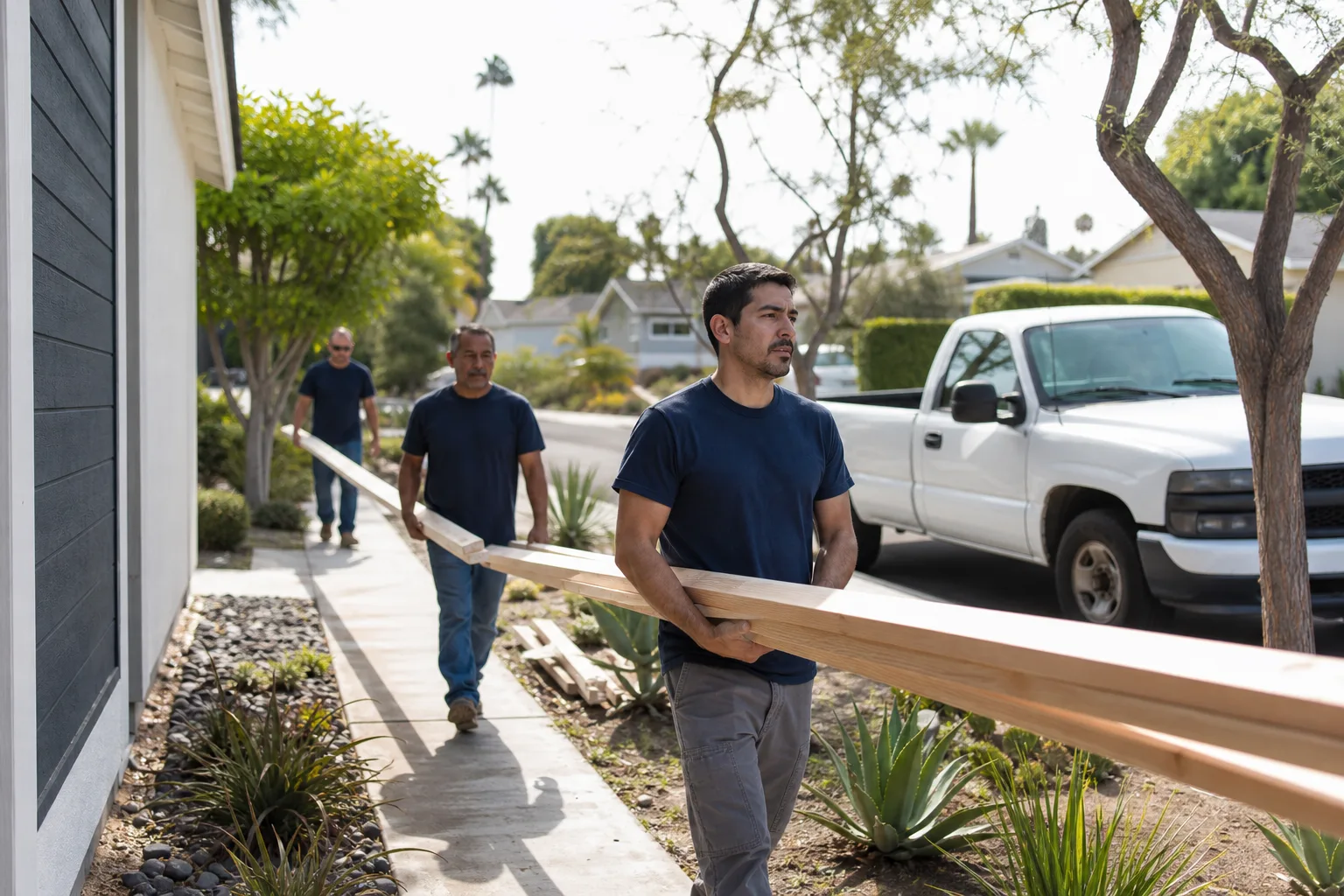
- “What’s your plan for the alley access and staging?” Sunrise Manor has a lot of lots with alley access and narrow side yards. A contractor who hasn’t thought about where materials and equipment go will discover the problem at the worst time.
- “Can I see a written workmanship warranty before I sign?” The answer should be a document, not a verbal promise. If they don’t have one, they don’t have one.
You’ll learn a lot from how they answer, but also from whether they ask you questions back. A contractor with real experience will want to know your lot dimensions, your existing electrical service, and your setbacks before quoting. One who throws out a number before asking anything is quoting a guess.
How Clark County’s Unincorporated Permit Process Works for ADUs
Because Sunrise Manor is unincorporated, ADU permits route through Clark County’s building and planning departments, not the city. The process includes plan review, permit issuance, inspections at set stages, and a final sign-off before you can legally occupy the unit. Contractors unfamiliar with the county’s process will burn weeks on resubmittals and delay the entire build.
The stages you should expect a contractor to walk you through:
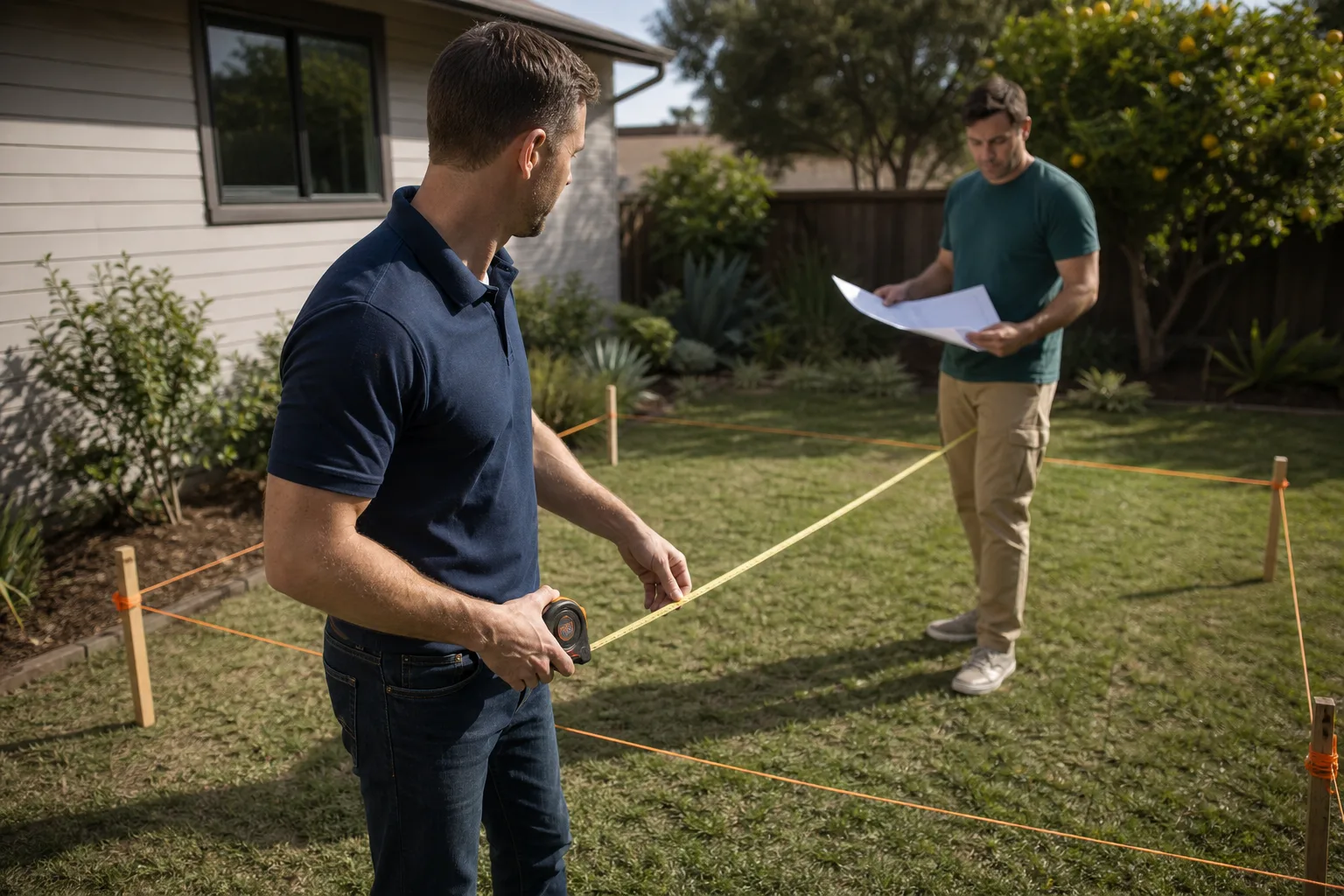
- Pre-application review: confirming your lot meets setback, lot coverage, and height requirements before you spend money on design.
- Plan submittal and review: architectural and structural plans submitted for county review, usually with at least one round of comments.
- Permit issuance: the point where fees are paid and construction becomes legal. No legitimate contractor starts work before this.
- Staged inspections: foundation, framing, rough-in electrical and plumbing, insulation, and final. These are scheduled through the county.
- Final sign-off: the document that lets you legally occupy or rent the unit.
Ask your contractor to show you the permit application they’ve filed and the county’s inspection card once construction starts. A permit that exists only in conversation doesn’t exist. In Sunrise Manor, where a lot of homes were built decades ago and sit on lots with varying access and utility setups, an experienced contractor will flag issues like undersized electrical panels or drainage problems during the pre-application phase – before they become change orders.
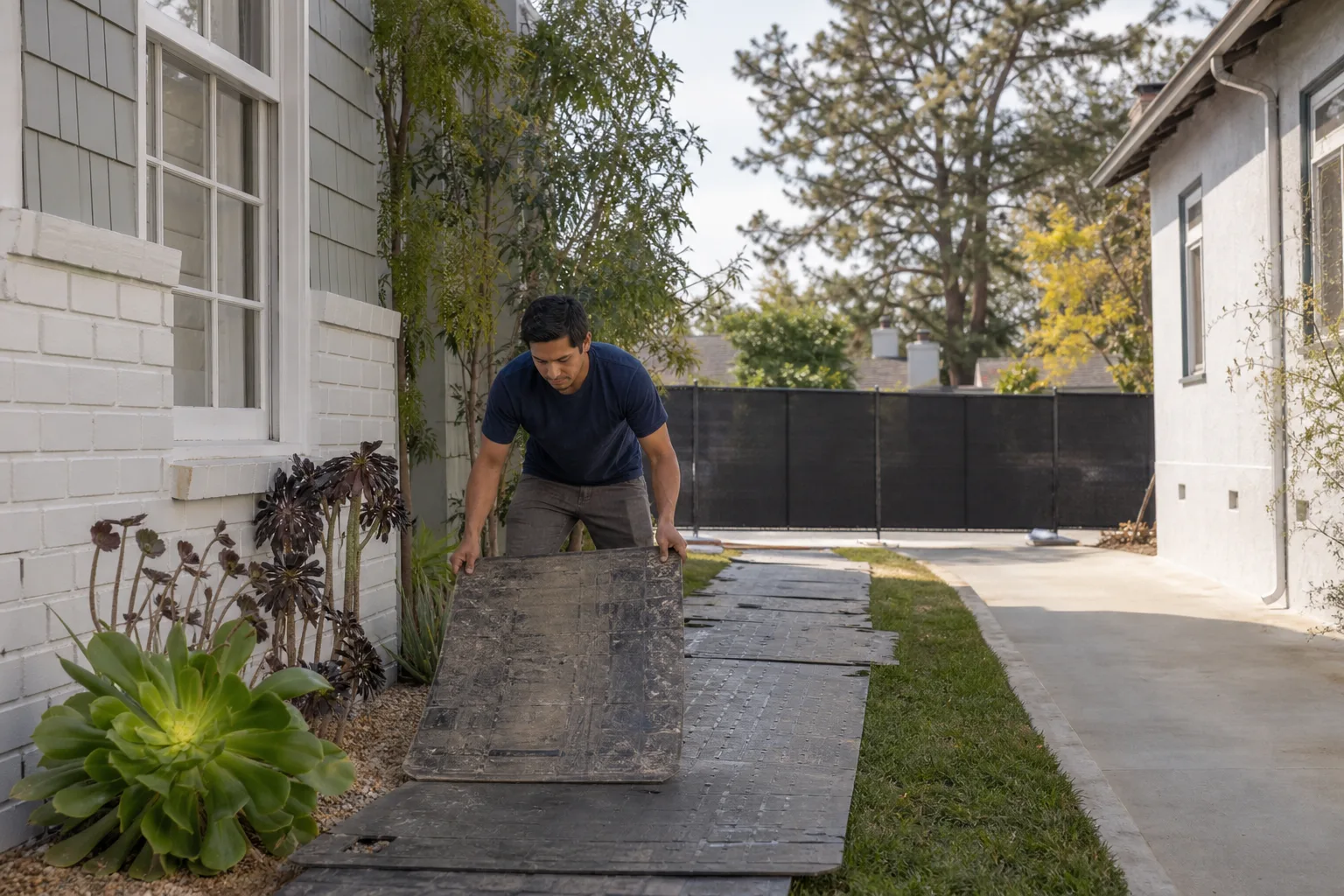
This is also where you’ll see how a contractor treats your home as a working site. Every visit under the Cedarwell Care Promise includes shoe covers and drop cloths, pet-safe products where there’s a choice, and a photo of the clean-up before the crew leaves. County inspections mean many people in and out; consistency in how your floors and air quality are protected is what keeps the house livable during the build.
What a Written Workmanship Warranty Should Actually Say
A workmanship warranty is a document, not a sentence in a proposal. It should state a duration, list what it covers and excludes, describe how to file a claim, and name the escalation path if the contractor doesn’t respond. If any of those pieces is missing, ask for them in writing before you sign – and treat a “we stand behind our work” answer as no warranty at all.
What to look for in the actual document:
- Duration in writing: at least one year on workmanship. Longer is better, but the number needs to be stated.
- What’s covered: labor and materials defects from the contractor’s work – framing, waterproofing, roofing, electrical, plumbing, finish installation. Not just “general workmanship.”
- What’s excluded: ordinary wear, acts of nature, and work you or another contractor did afterward.
- The claim process: how you notify them, and how long they have to respond.
- The escalation path: what happens if they don’t respond – typically a return to the Nevada State Contractors Board, whose files you’ve already checked.
At Seedling ADU Builders Sunrise Manor, every completed ADU, garage conversion, and home addition is covered by the 365-Day Done Right Promise – if it’s not done right, we make it right, and the promise is in writing. That’s the standard to hold any contractor to. Ask for a copy of the warranty before you sign the contract, not after the final inspection. The contractor who hands it over without being pushed is the one who’s thought about what happens after move-in.
Red Flags in the Proposal Stage
The proposal tells you more about how the construction will go than any reference call. Here’s what should make you slow down before signing:
- Vague allowances without dollar figures. “Allowance for flooring” with no number is a blank check. A real proposal states the dollar amount and how overages get handled.
- Missing line items for permits and plan review. If the proposal doesn’t mention permit fees, that cost will appear later – often after you’ve signed.
- Pressure to sign before plans are drawn. A contractor who wants a signature before design is finalized is locking you into a price that can’t be accurate. Design should come first, then fixed pricing.
- No written price before work starts. A verbal price is not a price. Every family should receive a written price before a single tool is picked up, with no surprise line items added after crews arrive.
- No mention of license, bond, or insurance on the paperwork. The license number should appear on the contract.
- A price that’s well below every other bid. On ADU work, a low bid usually means missing scope – one of the items above is going to reappear as a change order.
- No written warranty offered at signing. If they didn’t mention it, ask for it.
None of these are deal-breakers on their own, but two or more together is a pattern. The contractor you hire will be inside your house for months with kids and pets around. Get the paperwork right before you meet them on-site.
Prefab vs. Site-Built: How That Choice Affects Hiring
If you’re considering a prefab or modular ADU, the hiring problem changes shape. With a prefab unit from a manufacturer like Cover, Dvele, Mighty Buildings, or Boxabl, the unit itself is built off-site, and your contractor’s role shifts to site prep, foundation, utility connections, and installation coordination. That changes what you need to vet.
Questions to add when hiring for a prefab ADU in Sunrise Manor:
- Has the contractor installed units from the specific manufacturer you’re considering? Each manufacturer has its own foundation and utility requirements.
- Who coordinates delivery, crane or transport access, and site logistics? Narrow lots and alley access in Sunrise Manor make this a real planning question.
- Does the contractor handle the permit for a prefab unit, including the manufacturer’s plan submittal?
- What’s the warranty split between the manufacturer and the installer’s work – foundation, connections, and site work?
A contractor who works with several manufacturers gives you real choice about which product fits your lot, rather than pushing the one they prefer to sell. That’s part of why we work with brands like Cover, Dvele, Mighty Buildings, and Boxabl – the right answer depends on your lot, your access, and your budget, not on what a single builder happens to stock. Before you commit to a manufacturer, get your contractor’s input on whether that unit actually fits your Sunrise Manor lot.
Common Mistakes to Avoid
- Skipping the state license lookup. Ninety seconds on the Nevada State Contractors Board site can save you tens of thousands. Searching by the exact business name on the contract, not the name on the truck, is the whole game.
- Accepting an “owner-builder” permit because the contractor asked you to. This makes you the legally responsible party for the job and strips away the contractor’s bond protection. In Sunrise Manor, where county review is the governing process, this is a shortcut with real consequences.
- Hiring a city contractor for an unincorporated county project. Sunrise Manor’s permit process runs through Clark County, not the City of Las Vegas. A contractor without county ADU experience will add weeks to your timeline through resubmittals.
- Signing a cost-plus contract without a markup cap. On a long ADU build, an uncapped percentage markup can grow far beyond what a fixed price would have cost.
- Letting the contractor quote before asking about your lot’s setbacks and utilities. A price quoted without knowing your existing electrical capacity and drainage is a guess, and guesses become change orders on a Sunrise Manor lot with older infrastructure.
- Accepting a verbal warranty. “We stand behind our work” is not a warranty. Ask for the document with duration, coverage, and a claim process before you sign.
- Overlooking how the crew treats your home. Months of construction inside a house with kids and pets is a livability problem as much as a building one. Ask how floors, air quality, and daily clean-up will be handled before work starts.
When to Call a Professional
Some parts of an ADU project are yours to decide – budget, layout, whether it’s a detached unit, a garage conversion, or an addition to the house. Almost nothing else is safe to do yourself. Pulling a permit under your own name shifts legal liability onto you. Utility trenching, electrical service upgrades, and structural work on an ADU all require licensed trades and real inspection coordination through Clark County. If you’re weighing options – a Garage Conversion Contractor in Sunrise Manor for a faster, lower-cost conversion versus a full ADU Builders in Sunrise Manor project, or adding square footage to the main house through a Home Addition Contractor in Sunrise Manor – a free estimate is the right first conversation, not a DIY attempt. Seedling ADU Builders Sunrise Manor offers free estimates in Sunrise Manor – call (888) 419-5282. Every project gets a written price before any work begins, and our technicians bring up to 25 years of experience. If you’re still mapping out the full picture, Seedling ADU Builders Sunrise Manor home is a good starting point.
Frequently Asked Questions
ADU costs in Sunrise Manor typically run from roughly $90,000 for a garage conversion to $250,000-$400,000+ for a fully detached new unit, depending on size, site work, and utility upgrades. Prefab units from Cover, Dvele, Mighty Buildings, or Boxabl often land in the middle of that range once foundation, connections, and permits are included. The only way to know your actual number is a written fixed price after a site visit – estimates are free, and we’d rather you plan from a real figure than a range.
Yes. Because Sunrise Manor is unincorporated, ADU permits go through Clark County rather than the City of Las Vegas. Plan review, staged inspections, and final sign-off are all required before you can legally occupy or rent the unit. Ask any contractor to confirm they pull the permit under their own license, not yours, and be wary of any proposal that skips over permit fees.
Use the Nevada State Contractors Board database, search by the exact business name on the contract, and confirm the status reads active with current bond and insurance. Write down the license number and verify it matches the contract before you sign. It takes about 90 seconds and is the single most useful thing you can do before hiring anyone for a Sunrise Manor ADU.
It should state a duration in writing (at least one year), describe what’s covered and excluded, give a claim-filing process, and name the escalation path if the contractor doesn’t respond. A verbal “we stand behind it” is not a warranty. Ask for the document before signing and compare what it actually says – that’s how you know what you’re getting after move-in.
It shouldn’t if you’re on a fixed-price contract with itemized allowances and a written change-order process. Prices change under cost-plus contracts, or when a proposal is missing scope like permits or site work. Insist on a written fixed price before any work starts, with the process for change orders spelled out. If a contractor can’t commit to a fixed price before design is finalized, that’s your answer.
Most ADU projects in Sunrise Manor take six to twelve months from design through final inspection, with the county plan review and inspection schedule driving a big part of the timeline. Garage conversions often run shorter than detached new units. A contractor with real Clark County experience can give you a realistic schedule based on your lot and the current county review backlog – one without that experience will give you a guess, and the guess is usually too short.
Yes. We work with a range of prefab and modular ADU brands including Cover, Dvele, Mighty Buildings, Boxabl, Abodu, Plant Prefab, Tuff Shed, and James Hardie materials, so the choice comes down to your lot, your access, and your budget rather than what a single builder prefers to sell. A free site visit is the best way to narrow down which product fits your Sunrise Manor lot.
The Bottom Line
Hiring an ADU contractor in Sunrise Manor is a vetting problem, not a searching problem. Plenty of contractors will take the job. The ones worth hiring share four things: an active Nevada license with current bond and insurance, a fixed-price contract with permits and allowances in writing, real Clark County unincorporated permit experience, and a written workmanship warranty handed over at signing. Check the database, read the contract, ask the five questions, and walk away from vague numbers and pressure to sign. Get the paperwork right first, and the build takes care of itself.
Call (888) 419-5282 to schedule your free estimate. Every Seedling ADU Builders Sunrise Manor project gets a written price before any work starts, background-checked uniformed technicians on every visit, shoe covers and drop cloths inside the home, pet-safe products where there’s a choice, and a live person answering the phone 24/7. Live person, real price, in writing – because a new home on your lot should start with certainty, not a guess.
Written by the team at Seedling ADU Builders Sunrise Manor.