Last updated November 18, 2026
DIY vs Professional Home Addition Contractor: What’s Safe to Do Yourself
A homeowner in Nevada who builds an unpermitted room addition risks more than a fine. They risk having their insurance company deny a fire or water claim on the grounds that the structure was altered without permits. That’s the real cost calculation most DIY guides skip. In Clark County, the DIY-versus-hire question is a legal and insurance question before it’s ever a money question. This guide walks through which work legally requires a licensed contractor, how unpermitted additions surface at resale, what a homeowner can safely self-perform after framing, and how to have an honest scoping conversation with a contractor in Sunrise Manor without voiding warranties.
Quick Answer
In Clark County, structural work on a home addition (foundation, framing, electrical, plumbing, gas, and mechanical) must be permitted and pulled by a licensed contractor; a homeowner can usually only self-perform it under an owner-builder permit for their own primary residence, and doing so can void insurance and create title problems. Painting, trim, landscaping, and fixture selection are genuinely safe DIY tasks after framing is complete. Everything between those two ends of the spectrum needs careful scoping.
Table of Contents
- Where the Legal Line Actually Falls in Clark County
- What an Owner-Builder Permit Really Covers
- The Insurance Gap You Open With DIY Structural Work
- How Unpermitted Additions Surface at Resale
- What’s Genuinely Safe to Do Yourself After Framing
- How to Scope DIY Work With Your Contractor Honestly
- Warranties, Insurance, and the Money Question
- Sunrise Manor Climate and Site Conditions That Change the Math
Where the Legal Line Actually Falls in Clark County
Clark County draws a bright line between work that requires a licensed contractor and work a homeowner may legally self-perform. That line matters more in Sunrise Manor than most homeowners realize, because the housing stock here is a mix of older ranch homes and newer infill, and the county has seen enough unpermitted additions that inspectors know what to look for. Here’s the practical breakdown.
- Requires a licensed contractor: foundation work, structural framing, roof framing, electrical rough-in and final, plumbing rough-in and final, gas line work, HVAC installation or modification, and any structural modification to an existing load path.
- Usually allowed under an owner-builder permit: non-structural improvements on a homeowner’s primary residence, such as finish carpentry, painting, landscaping, and certain fixture replacements, but only when the homeowner pulls the correct permit.
- Never allowed without a permit: any change to the footprint, roofline, or structural system, regardless of who does it.
Sunrise Manor sits within unincorporated Clark County, which means county building department rules apply rather than a separate municipal code. That’s a small but useful fact: it means one authority governs the permit, one set of inspections applies, and one set of records gets pulled when a title company requests a permit history. If you’re considering a home addition in Sunrise Manor, confirm the property’s specific zoning and set back requirements before any design work begins – those checks are part of what a Home Addition Contractor in Sunrise Manor handles as a first step.
What an Owner-Builder Permit Really Covers
An owner-builder permit sounds like a loophole. It isn’t. It exists so a homeowner can build or improve their own primary residence without a contractor license, and it comes with conditions that catch people off guard. In Nevada, the owner-builder exception is narrow, and it does not transfer to a buyer.
Here’s how to think about it honestly.
- It’s for your primary residence only. Build an addition under an owner-builder permit on a home you rent out and you’ve crossed the line into unlicensed contracting.
- The homeowner takes on the general contractor role. That means scheduling subs, ordering materials, coordinating inspections, and absorbing any calls that go sideways. Subs aren’t your employees; you carry the risk.
- Every subcontractor still needs their own license and permits. You can’t self-perform electrical, plumbing, gas, or mechanical work under an owner-builder permit just because you own the home.
- You answer every inspection. Missed inspection windows and re-inspections cost time and money, and there is no warranty when you’re the builder.
- The permit history is permanent. Whatever shows on the record is what a buyer, lender, and title company will see in five or ten years.
In our experience walking Sunrise Manor properties, the homeowner projects that look simplest end up tangled in owner-builder paperwork once a lender gets involved. If you’re weighing a ADU Builders in Sunrise Manor project against a full home addition, start with the permit path – the rest of the decision follows.
The Insurance Gap You Open With DIY Structural Work
This is the part most DIY guides leave out. Homeowners insurance policies generally require the insured to disclose material changes to the structure and to keep the property in code-compliant condition. A room addition built without permits is a material change that isn’t disclosed. That creates a gap you may not discover until you have a claim.
Picture a kitchen fire in a Sunrise Manor home where the addition was built DIY without permits. Adjusters walk the property, note the wall that isn’t on the insured’s original policy schedule, and the conversation shifts from “what did the fire damage” to “was this structure ever approved.” The insurer can reduce a payout, exclude the affected area, or – in the worst cases – deny the claim and cancel the policy going forward. Water damage from a shower in an unpermitted bathroom follows the same logic.
There’s a second exposure most homeowners don’t think about: liability. If a guest is injured in a room that was added without permits, that’s a claim surface. If the work was done by an unlicensed contractor, there’s no coverage under their general liability policy either, because they likely don’t have one.
The fix isn’t complicated, but it has to happen before work begins. Pull the permits. Use a licensed contractor. Keep the inspection records. That sequence is what a written, insured project provides – and it’s why we put the price in writing before any tools come out, so the paperwork trail and the cost both exist on paper from day one.
How Unpermitted Additions Surface at Resale
When a Sunrise Manor home sells, the title company runs a permit search on the property. Anything in the county record that shows a structure without a corresponding permit becomes an exception on the title commitment. The language is formal but blunt: something along the lines of “This policy does not insure against loss or damage arising from any structure shown on the survey that was constructed without required permits, and such structure is hereby excepted from coverage.”
You’ll see this described variously as an encumbrance, an exception, or an excluded structure. What it means in plain terms is that your buyer’s lender may refuse the loan, or your buyer’s agent will ask for a price reduction, or the deal stalls while the permit is retroactively applied for – which, in Clark County, means opening walls so an inspector can see the framing and rough-ins.
Retroactive permitting is possible. It’s often more expensive than doing it correctly the first time because you’re paying for a demo-and-verify process plus inspection corrections. In Sunrise Manor, we’ve seen additions from the last housing cycle surface this way, and the cost to cure regularly exceeds the original cost difference between DIY and licensed work. The math almost never favors the shortcut.
What’s Genuinely Safe to Do Yourself After Framing
Once a professional contractor has completed framing, passed rough-in inspections, and closed up walls, there’s a real list of tasks a careful homeowner can handle. This is where DIY actually saves money without touching the legal or insurance equations. In Sunrise Manor, these are the tasks we routinely hand back to homeowners who want to stay involved.
- Interior painting. Pick the paint, prime the walls, cut in the corners. County inspectors don’t care who held the brush, and a good paint job won’t affect your coverage. This is one of the largest labor lines you can genuinely reduce.
- Trim and finish carpentry. Baseboards, window casing, and door trim are not structural. If you’re comfortable with a miter saw, this is fair game.
- Landscaping and site work outside the footprint. Planting, low-voltage landscape lighting, and path materials don’t require a permit. Anything that changes drainage or grading near the foundation needs a conversation first.
- Fixture selection and procurement. Choosing the faucet, lighting, and cabinet hardware – even buying them yourself – can trim a real line off the budget without touching the scope.
- Closet build-outs and interior storage after drywall. Freestanding or surface-mounted systems are safe. Anything that requires a structural attachment or electrical work is not.
- Furniture-grade built-ins that aren’t attached to walls. Bookcases and shelving that stand on their own don’t require permits.
What is not on this list: any electrical, any gas, any plumbing, any roof work, any change to the exterior envelope, and any work that requires climbing to reach it. Those items have real safety consequences, and Clark County requires licenses for good reasons.
How to Scope DIY Work With Your Contractor Honestly
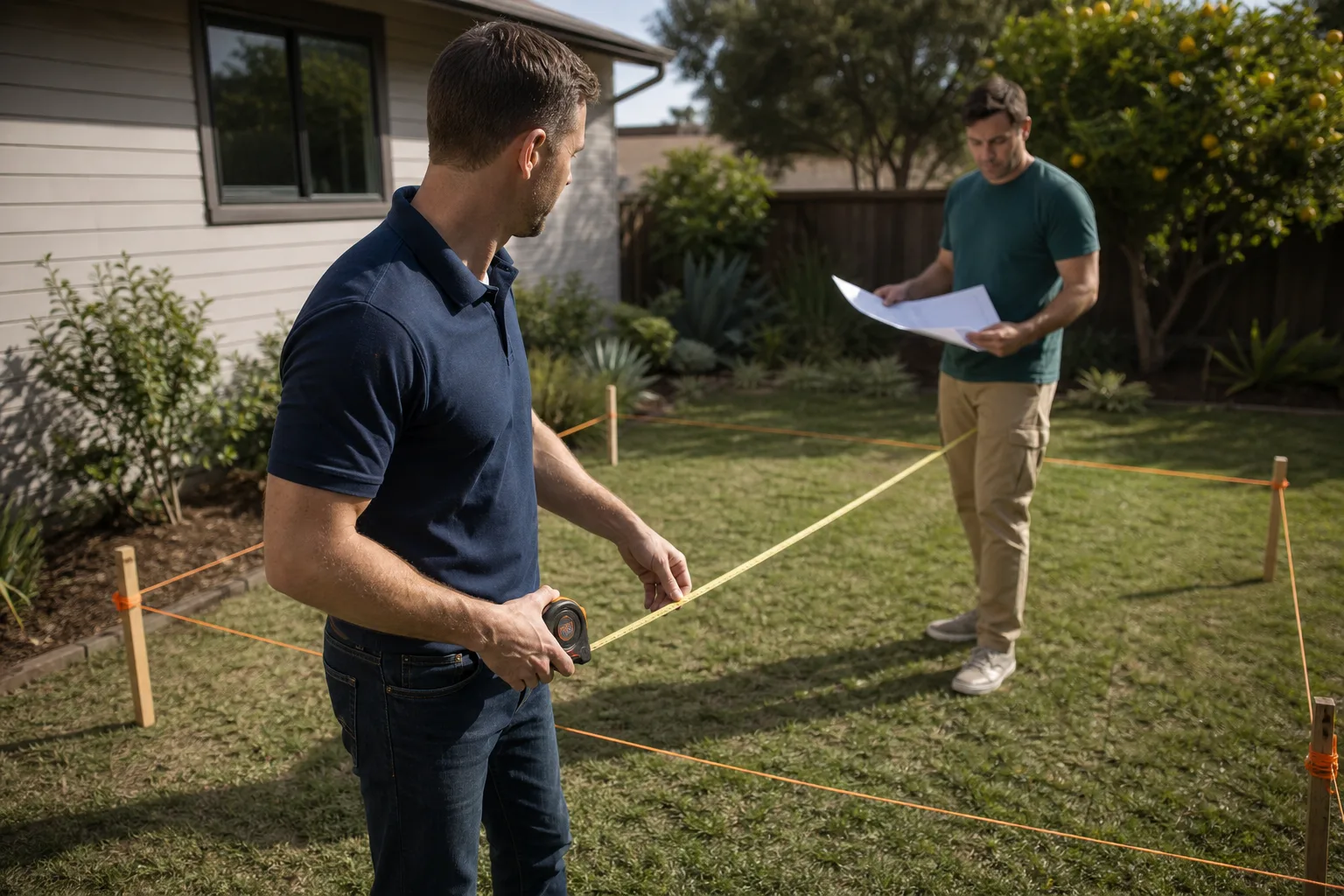
There’s a better conversation than “how much can I save by doing it myself,” and it starts with a written scope split. A contractor should be able to hand you a document that lists every line item and marks each one as contractor-performed or homeowner-performed, along with a note on what the warranty covers in each case. When we build a home addition or a Garage Conversion Contractor in Sunrise Manor project, that document is how families decide what they want to take on.
Here’s the sequence that avoids surprises.
- Ask for line-item pricing first. Vague allowances hide the cost of the decisions you haven’t made yet. A written, line-item price lets you compare the actual trade-offs.
- Identify the finish-scope items you want to own. Painting, trim, landscaping, and fixture selection are the usual suspects.
- Get the warranty language in writing for the retained scope. A good contractor will warrant their work and will name in writing that homeowner-performed work is excluded from the warranty. That’s not a penalty – it’s an honest boundary.
- Agree on a clean hand-off point. If you’re painting, the contractor should leave the site clean, dry, and ready for paint on a named date. Not “when we get to it.”
- Confirm insurance and permit responsibility stays with the contractor for their scope. If their crew is on site at any point, their coverage has to apply.
- Put it all in the written agreement before work starts. Handshake scope splits cause the worst disputes at the end of a build.
This is why upfront pricing matters more than the sales pitch. A family in Sunrise Manor comparing a home addition against a prefab option like an Abodu or a Cover unit should have both paths priced in writing before committing to either.
Warranties, Insurance, and the Money Question
Here’s the number most DIY guides won’t put on the page: the cost of pulling retroactive permits and correcting an unpermitted addition in Clark County often runs into the tens of thousands. The cost of licensed, permitted work is the price of the addition plus permits. The cost of a claim denial on a fire in an unpermitted room can be the entire rebuild.
Those are not small deltas. When you look at the warranty side, the picture firms up further. A proper contractor warranty names a period and a remedy – for example, our 365-Day Done Right Promise covers every ADU, garage conversion, and home addition we build for a full year, in writing. We can offer that because we control the scope. A homeowner who self-performs structural work owns the outcome, and no warranty gets transferred to a future buyer.
We use brands homeowners already research – James Hardie siding, Dvele panelized systems, Abodu units – because those products have manufacturer warranties that require licensed installation to remain valid. Splice a James Hardie installation with a DIY framing scope and you can void the manufacturer’s coverage. That’s the money question. It’s not “how much does DIY save,” it’s “what does DIY cost when the warranty is void and the insurer has a reason to look the other way.”
Sunrise Manor Climate and Site Conditions That Change the Math
Sunrise Manor runs hotter and drier than the Las Vegas valley average, and the local soil conditions – caliche layers, expansive clays in patches – can turn a foundation plan sideways if they aren’t designed for. That’s a real reason framing and foundation work shouldn’t be treated as a homeowner task, no matter how skilled you are with tools. Summer heat also affects concrete curing windows and paint schedules: interior paint in a Sunrise Manor July is a very different job than the same task in March.
Wind-driven dust during spring months is another local factor that shapes staging and finishing. Exterior finishes and window installation scheduled around dust events hold up better; painting a siding panel during a blowing-dust afternoon all but guarantees rework. Knowing the local calendar is a genuine part of the trade experience in Sunrise Manor, and it’s one reason our technicians – who have up to 25 years of experience – schedule exterior finish work with the season in mind.
If you’re sketching a project that touches your lot, look at it through the Seedling ADU Builders Sunrise Manor home page. The way we think about a small, purpose-built home on a Sunrise Manor lot applies to any addition: plan for the ground first, design the structure second, choose the finishes third.
Common Mistakes to Avoid
- Assuming an owner-builder permit covers everything. It doesn’t. Electrical, plumbing, gas, and mechanical always need a licensed trade, even on your own home.
- Doing structural work without pulling the permit because “nobody will notice.” Sunrise Manor permit histories show up in every title search, and inspectors regularly find unpermitted work through utility records alone.
- Buying high-end materials with a warranty and installing them unlicensed. James Hardie and Dvele cover their products on the condition the installation is by licensed trades; DIY installation voids the coverage.
- Skipping the written scope split. Vague hand-off points between homeowner and contractor work cause delays and disagreements that a line-item document prevents.
- Painting exterior surfaces in the middle of a dust event. Sunrise Manor’s spring winds are unforgiving; a rework bill is more than the savings.
- Waiting until listing to fix an unpermitted addition. Retroactive permitting is more expensive and more invasive than doing it correctly upfront, and the buyer’s lender may not wait.
- Signing a contract with allowances instead of line items. Allowances are how over-budget projects happen; written pricing before work begins is the difference between a fixed number and a moving target.
When to Call a Professional
Call a professional the moment your project touches foundation, framing, the roofline, electrical, plumbing, gas, or any exterior envelope change. Call one if the property has any existing unpermitted work you’d like to correct before listing. Call one if you’re considering an owner-builder permit, since the trade scopes will need real licenses anyway. Call one if you’re comparing a home addition against a prefab option and want both priced honestly. Call one if you want a written price and a background-checked, uniformed crew in your home rather than a rotating cast of subs. Seedling ADU Builders Sunrise Manor offers free estimates in Sunrise Manor – call (888) 419-5282.
Frequently Asked Questions
In Clark County, you can apply for an owner-builder permit on your own primary residence, but only for the scopes that don’t require a licensed trade – and you’re still required to pull permits and pass inspections. Electrical, plumbing, gas, mechanical, and structural work performed by unlicensed people is not allowed even under an owner-builder permit. Call (888) 419-5282 for a free estimate on which scopes a licensed contractor has to carry.
It may not. Homeowners policies generally require disclosure of structural changes and code-compliant condition, and an unpermitted addition creates a coverage gap an adjuster can raise after a loss. Some insurers will reduce or deny the claim and cancel the policy. That’s the real cost of unpermitted work, and it’s why the permit path matters before any project begins.
They run a permit search through the county building department, and any structure without a corresponding permit shows up as an exception or encumbrance on the title commitment. That exception travels with the property and can stall the sale or reduce the price. Retroactive permitting is possible, but it usually costs more than doing it correctly the first time.
After framing and rough-in inspections are passed and drywall is closed up, painting, trim carpentry, landscaping outside the footprint, fixture selection, and freestanding storage are all reasonable DIY scopes. Anything electrical, gas, plumbing, roof-related, or structural is not. Call (888) 419-5282 to get a line-item scope so you can decide what to keep yourself.
Permitted home additions in the Sunrise Manor market generally land in a wide range depending on size and finish level – a straightforward primary-suite addition and a full second-story addition are very different projects. What matters most is having the number in writing before work starts, with no line items added after crews arrive. Call (888) 419-5282 for an exact quote – estimates are free.
Only if the scope boundaries are written into the agreement. Contractors warrant their own work and typically exclude homeowner-performed work from their warranty, and manufacturer warranties on products like James Hardie siding or Dvele systems usually require licensed installation. Splitting the scopes clearly in writing protects the warranty where it counts. Call (888) 419-5282 to plan the split in advance.
The Bottom Line
The DIY-versus-hire question for a Sunrise Manor home addition is a legal and insurance question first. Structural work without permits opens two kinds of risk: a coverage gap that surfaces when you need your insurer most, and a title encumbrance that surfaces at resale. Neither is worth the savings. What’s genuinely on the table for a careful homeowner is finish-scope work after framing is signed off – painting, trim, landscaping, fixture selection – and that’s a real cost reduction when it’s scoped in writing. Everything structural needs a licensed trade, a pulled permit, and an inspection record. The companies that build additions with written pricing, insured crews, and a warranty honored for a full year are the ones that make those risks disappear. That’s the work we do, and it’s what a free estimate makes concrete before a tool is lifted.
Call Seedling ADU Builders Sunrise Manor at (888) 419-5282 to schedule your free estimate. We’ll walk the property, review the permit path, and put a written, line-item price in your hands before any work begins.
Written by the team at Seedling ADU Builders Sunrise Manor.