Last updated November 18, 2026
Home Addition Contractor Troubleshooting: Common Problems and How to Fix Them
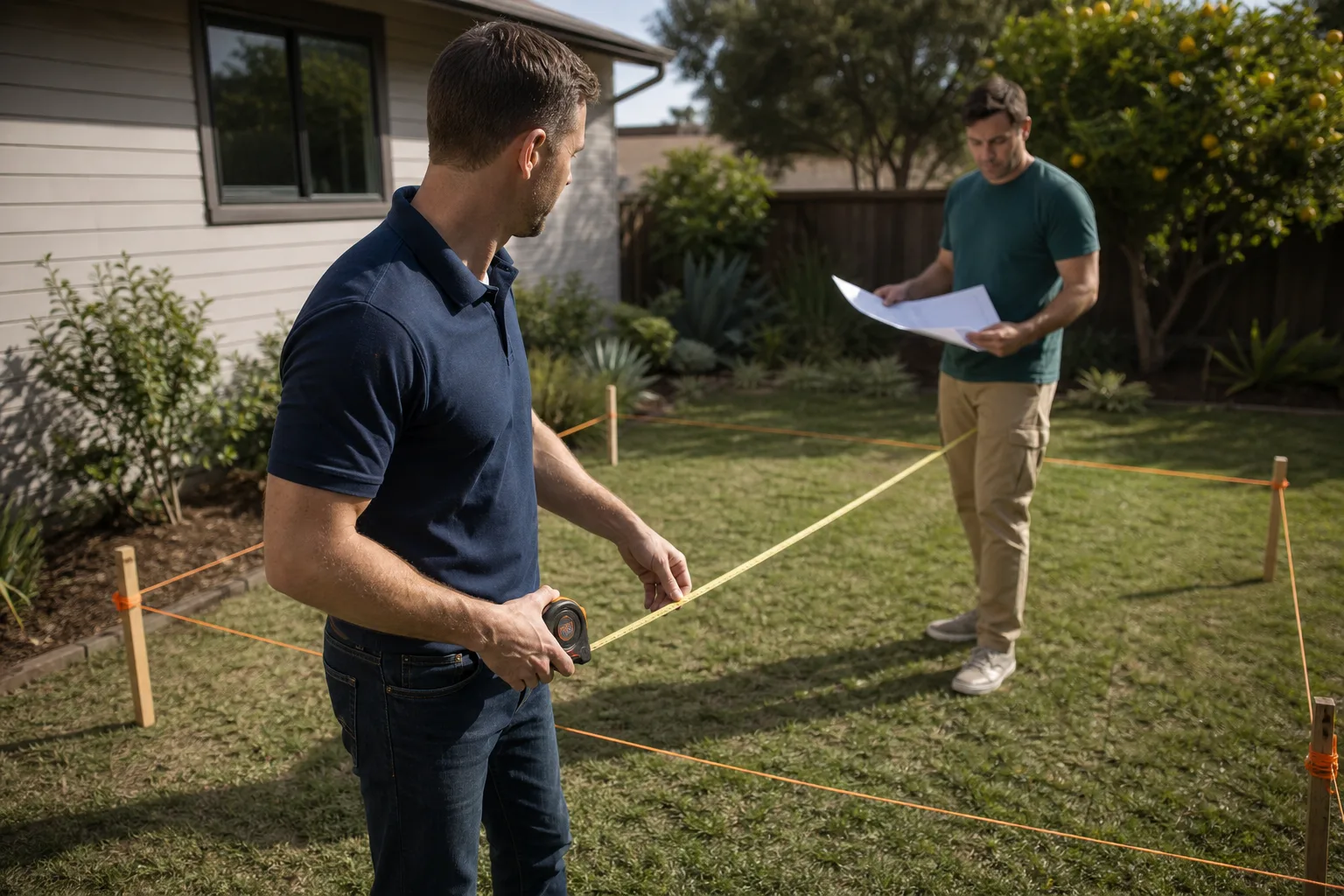
A hairline crack above a new addition doorway isn’t a drywall problem. It’s usually a foundation or framing problem that was already there when the inspector signed off, and knowing the difference decides whether your contractor fixes it for free or bills you again. Most home addition problems in Sunrise Manor don’t start at the job site. They start in the contract, and by the time the crack shows up or the permit stalls, the homeowner has already given away the leverage that would have settled it. This guide works backward from the finished-product failures we see most often to the contract clauses and inspection gaps that caused them, so you know what to ask, what to document, and what to do when a contractor stalls.
Quick Answer
Most home addition problems trace back to three fixable points: an unclear scope in the written contract, a final inspection that confirmed code minimums rather than correct work, and missing documentation when a defect appeared. If you’re facing a crack, an HVAC failure, or a contractor who won’t return, the fix starts with written documentation and a specific repair request, then moves to the Nevada State Contractors Board if that fails. Everything below explains how to identify the problem, what a proper fix looks like, and how to protect yourself before the first shovel goes in.
Table of Contents
- Is That Crack Cosmetic Settlement or a Framing Error?
- Why Final Inspection Sign-Off Doesn’t Mean the Work Is Right
- The Three HVAC Extension Failures We See Most in Sunrise Manor
- How to Document a Defect So the Warranty Is Actually Actionable
- Your Recourse Through the Nevada State Contractors Board
- The Contract Clauses That Prevent Most of These Problems
- Permits, Inspections, and Final Payment
- Sunrise Manor Climate and Soil: Why Local Additions Move
Is That Crack Cosmetic Settlement or a Framing Error?
Most hairline cracks in a new addition are cosmetic settlement, but some are the first visible sign of a framing or foundation error, and the pattern tells you which. A cosmetic crack is typically vertical, hairline (under 1/16 inch), appears within the first 12 to 18 months, and shows up at drywall seams or above door and window corners. A structural crack is wider than 1/8 inch, runs diagonally from a corner, stair-steps through brick or block, or keeps widening month after month. In Sunrise Manor, where expansive clay soils and summer heat cycling both push on a new foundation, we see more movement than in cooler, more stable markets, and that makes the distinction matter more.
Here’s how to tell which one you’re looking at:
- Measure the width. Use a feeler gauge or a business card (about 0.01 inch). Under 1/16 inch and stable is usually cosmetic. Over 1/8 inch needs a contractor visit.
- Track it over time. Photograph the crack with a dated object in frame. Check again in 30 days. A crack that grows is not settling; it’s moving.
- Look at the pattern. Diagonal cracks from a door or window corner suggest framing or header issues. Stair-step cracks in masonry suggest foundation movement.
- Check the doors. If a door in the addition suddenly sticks or swings open on its own, the frame has shifted beyond normal settling.
Ask your contractor three specific questions: Was the foundation engineered for the soil on this lot? What was the moisture content of the framing at installation? And is this crack within the tolerances your warranty defines as normal? A contractor who answers those in writing is a contractor whose work is worth trusting. One who deflects is telling you something too.
Why Final Inspection Sign-Off Doesn’t Mean the Work Is Right
A final inspection sign-off means the work meets minimum code, not that it was done correctly or well. Inspectors check specific code points in a limited window. They do not check whether your trim was installed with the right fasteners, whether the subfloor was glued as well as nailed, whether the drywall was hung with the right screw schedule, or whether the roofline was shingled with the correct overlap. Those are the details that show up as problems in year two and three, long after the inspector has moved on.
Before you release final payment, walk the addition yourself. Bring a flashlight and a level. Here’s what to check:
- Levels and squares. Put a 4-foot level on every countertop, floor, and door header. Out-of-level surfaces over 1/8 inch show up underfoot and behind cabinetry.
- Flashing and roof transition. Where the new roof meets the old, look for properly layered step flashing, not just sealant. Sealant is a shortcut that fails in two summers of Sunrise Manor heat.
- Door and window operation. Every exterior door should latch without force, and every window should open and close smoothly. Stiff operation suggests a frame out of square.
- Electrical outlets and switches. Test every one. Feel for warmth at the panel and at outlets after 30 minutes of load.
- HVAC airflow. Ask for the room-by-room airflow measurement. “Feels fine” is not a measurement.
- Water management. Run a hose on the roof for 20 minutes and check for leaks inside. Do this before the crew leaves the site.
If you don’t know what you’re looking at, hire a third-party inspector for a few hundred dollars. That’s the cheapest insurance you’ll ever buy on a five-figure project, and it gives you a written, dated record of any defect before final payment. The 365-Day Done Right Promise is only as good as your documentation; getting that walk done before final payment is what makes it enforceable.
The Three HVAC Extension Failures We See Most in Sunrise Manor
HVAC extension failures in home additions almost always trace to a skipped or sloppy load calculation, and in Sunrise Manor’s 100°F-plus summers they show up fast. A proper Manual J load calculation measures the new room’s square footage, windows, insulation, and orientation, then sizes the system to match. When it’s skipped or guessed, the new room is either too hot, too cold, or keeps the whole house uncomfortable because the original system is now overloaded. Here are the three failures we see most often:
- The system was extended without a new load calculation. The contractor ran a supply duct into the new room and called it done. The original system was sized for the original house, and now the new room gets 60% of the airflow it needs. The fix is a proper load calculation and either a reconfigured duct design, a mini-split for the addition, or an upgraded air handler.
- The return path was never addressed. Supplies without return airflow create pressure imbalances. The new room gets air in but no path out, so it stays warm and the rest of the house runs slightly pressurized, which pulls dust into the envelope. The fix is a return grille and duct to the addition, not a larger supply.
- The duct runs pass through an unconditioned attic. Sunrise Manor attics hit 140°F in summer. Uninsulated or underinsulated duct in that attic loses much of its cold air before it reaches the room. The fix is R-8 duct insulation at minimum and a sealed attic path.
Before work starts, insist on a written load calculation (Manual J) and a duct design (Manual D). Ask to see them. A contractor who does this as routine will show you the numbers; one who doesn’t will tell you it’s unnecessary. In a Sunrise Manor summer, that’s the difference between a comfortable addition and a room your family avoids from June to September.
How to Document a Defect So the Warranty Is Actually Actionable
A warranty is only as strong as the documentation behind it, and most home addition warranty claims fail on paperwork, not on the substance of the problem. A contractor can honestly dispute a verbal complaint; a dated, photographed, written report is much harder to dismiss. Build the file the day you notice the problem, not the day you decide to call a lawyer. In our experience, homeowners who document the moment they spot a defect get faster, cleaner resolutions than those who wait and hope it settles.
Here’s the file you need:
- Photos with a scale and date. Photograph the defect with a ruler or tape measure in frame, and note the date in the photo or beside it. Take the same photo every 30 days.
- A written notice to the contractor. Email is best; it’s dated and archived. State the defect, the date you first observed it, what you expect done, and a deadline (14 days is reasonable).
- The contract and all change orders. Keep them together. The warranty terms are defined in the contract, and the specific promise you’re relying on has to be in writing somewhere.
- The permit and inspection records. Pull your permit history from Clark County. It documents what was inspected and when.
- A third-party report if the problem is structural. A licensed engineer’s letter is $300 to $700 and settles most arguments about whether a crack is cosmetic.
- All repair receipts. If you had to pay a third party to fix something the original contractor should have fixed, that receipt is what turns into a claim.
Send every notice through email so there’s a timestamp. If your contractor doesn’t respond within 14 days, that email chain becomes the first exhibit in a complaint to the Nevada State Contractors Board. Documenting carefully is not aggressive; it’s the only way warranty language means anything.
Your Recourse Through the Nevada State Contractors Board
The Nevada State Contractors Board is the licensing and complaint body for contractors in Sunrise Manor and across the state, and it’s the right place to go when a contractor refuses to return for warranty repairs. The board’s process is slower than a phone call but much faster than court, and the mere filing of a complaint moves many contractors to pick up the phone. Before you file, work the sequence:
- Send the contractor a written repair request. Give them a specific deadline (14 days is standard) and state exactly what you want fixed. Keep it in email.
- If they don’t respond, send a second notice. Reference the first notice, restate the deadline, and say you’ll file a complaint with the Nevada State Contractors Board if they don’t respond.
- File a complaint online with the board. You’ll need the license number, contract, photos, and documentation of your attempts to resolve. The board will open a case and can require the contractor to respond.
- Consider a mechanic’s lien or small claims action if the board process stalls. For amounts under Nevada’s small claims limit, small claims court is often faster than the board for straight money disputes.
The key detail: Nevada requires that contractors with active complaints resolve them before their license can be renewed, which means a filed complaint carries real weight. And if a contractor’s bond was posted as part of licensing, the bond may be a source of recovery for certain claims. Keep the board complaint factual, dated, and supported by your file. Never name-call or exaggerate. If you want to understand how a well-run addition should be documented from day one, our Home Addition Contractor in Sunrise Manor page walks through the process we follow.
The Contract Clauses That Prevent Most of These Problems
Nearly every problem in this guide can be prevented by three contract clauses that cost you nothing to ask for and cost a contractor little to agree to. The reason most homeowners don’t ask is that nobody told them to. Here are the clauses to insist on before any home addition starts in Sunrise Manor, and what to do if a contractor resists:
- A written scope with tolerances. Not “install drywall” but “install 1/2-inch drywall with 1-5/8-inch screws at 12 inches on center.” Not “extend HVAC” but “provide Manual J and Manual D, install R-8 duct in attic, commission 350 CFM at grilles.” Tolerances tell you what “done” means.
- A fixed price with a change-order process. Every dollar amount should be on the page before work starts, and any change should require your written sign-off. This is the single best protection against the “surprise line items after the crew arrives” problem, and it’s the standard we hold ourselves to at Seedling: a written price before any work begins.
- A warranty clause with a named remedy. “We guarantee our work for one year” is weak. “Within 12 months of completion, we will repair any defect in materials or workmanship at no cost to you, using the same materials and methods, within 14 days of written notice” is enforceable.
Ask for the contract at least three days before signing, and read it in full. The most common problem we see is homeowners signing a one-page estimate that has no scope, no tolerances, and no remedy language. That single page is the source of most of the disputes that land in front of the Nevada State Contractors Board. Our Garage Conversion Contractor in Sunrise Manor page shows how a written, itemized scope looks for smaller additions.
Permits, Inspections, and Final Payment
Pulling the permit is the contractor’s job, but confirming it’s been pulled, inspected, and signed off is yours. In Sunrise Manor, the most common permit failure is a project that never received a final inspection because the contractor wrapped up and moved on, leaving the homeowner with an open permit that blocks future sales or refinancing. Before work starts, ask for the permit number and confirm it in the county’s online portal. After the work is done, ask for the signed final inspection card.
Here’s the sequence we recommend for final payment:
- Request the signed inspection card. No final payment until you have it in hand.
- Walk the work with a licensed inspector. A few hundred dollars spent before final payment can save thousands later.
- Run the systems. HVAC for a full day, plumbing for two hours, electrical under load for 30 minutes.
- Document everything. Photos, notes, and any punch list items in writing.
- Hold final payment until the punch list is cleared. A 10% holdback is standard in Nevada for larger jobs and is usually written into the contract.
If you’re considering an ADU rather than a traditional addition, the permit path is different and the sequencing matters, which is why our ADU Builders in Sunrise Manor page covers it end to end.
Sunrise Manor Climate and Soil: Why Local Additions Move
Sunrise Manor sits on expansive clay soils that swell in the monsoon season and shrink in the dry heat, and that movement pushes on every new foundation in the neighborhood. Add summer temperatures above 110°F and the daily thermal cycling that puts a new addition through more expansion and contraction in one year than a cooler market sees in three, and you have a physical reason why local additions show cracks and settling more than the same build in Oregon or Colorado. This is not a defect in the contractor; it’s a fact of the ground. It’s also why the foundation design, the moisture content of the framing, and the drainage plan matter more here than the marketing photos suggest.
Two local details worth knowing:
- Footing depth and moisture conditioning. Foundations on Sunrise Manor’s clay should be engineered for the specific lot, and the soil should be moisture-conditioned before pouring. Skipping this step is the single most common cause of the settlement cracks we see in year two.
- Drainage on a flat lot. Sunrise Manor lots frequently grade flat, so roof water and irrigation need a deliberate path away from the new foundation. Swales and gutters that discharge four feet from the house are cheap; underpinning at year five is not.
If a contractor tells you the local soil doesn’t matter, that’s your signal to find another contractor. For the wider picture of how we handle sites here, see our Seedling ADU Builders Sunrise Manor home page.
Common Mistakes to Avoid
- Signing a one-page estimate. Every home addition in Sunrise Manor needs a scope, tolerances, a fixed price, a change-order process, and a named remedy. A one-pager is a recipe for disputes, and it’s what most calls to the Nevada State Contractors Board start with.
- Releasing final payment before the final inspection card. The last 10% is your only real leverage. Pay it after the walk, not before.
- Accepting “it’s just settling” without measurement. Hairline cracks under 1/16 inch that aren’t growing are usually fine. Anything wider, diagonal, or growing needs a documented check.
- Skipping the load calculation on HVAC. A contractor who won’t show you the Manual J and Manual D numbers is telling you the system was sized by guess. In Sunrise Manor summers, that guess is expensive.
- Documenting verbally. “I called and told them” is not documentation. Photos, dated emails, and a written repair request with a 14-day deadline are.
- Letting a contractor pick the ADU brand without options. Brands like Cover, Dvele, and Mighty Buildings each fit a different lot and budget. If your contractor only offers one, that’s their preference, not your best fit.
- Ignoring the drainage plan. A flat Sunrise Manor lot without proper grading pushes water into the new foundation. It’s the easiest problem to fix before construction and the most expensive after.
When to Call a Professional
Call a professional when the defect is growing, structural, or documented and ignored. If a crack widens past 1/8 inch, a door in the addition stops latching, HVAC can’t keep the new room comfortable, or the contractor has stopped responding to written repair requests, stop guessing and get a licensed set of eyes on it. Those are the cases where a small fix today becomes a five-figure fix in year three. If you’re planning a new addition and want the process done with written pricing, a documented inspection record, and a real warranty behind it, Seedling ADU Builders Sunrise Manor offers free estimates in Sunrise Manor. Call (888) 419-5282 to schedule one. Every project gets a written price before work starts, background-checked technicians, shoe covers and drop cloths, and a photo of the clean-up before the crew leaves.
Frequently Asked Questions
Not usually, but it depends on the pattern. A vertical hairline crack under 1/16 inch that appears in the first 12 months and doesn’t grow is normal settlement. A diagonal crack over 1/8 inch, or one that keeps widening, points to framing or foundation movement and needs a contractor visit within 30 days. Photograph it with a scale, date it, check it again in 30 days, and call (888) 419-5282 for a free estimate if it’s growing. Sunrise Manor’s clay soils make the pattern check more important here than in most markets.
No. Final inspection confirms the work meets minimum code, which is a floor, not a ceiling. Inspectors check specific code points, not the quality of trim work, subfloor glue, flashing details, or HVAC balancing. Before you release final payment, walk the addition with a flashlight and level, run every system, and hire a third-party inspector if you’re unsure. The few hundred dollars you spend on that inspection is the cheapest protection on a five-figure project.
Almost always because the HVAC system was extended without a proper Manual J load calculation or Manual D duct design. The new room gets a supply duct sized by guess, with no return path, and the original system is now overloaded. In Sunrise Manor’s 100°F summers, the failure is obvious within weeks. The fix is a proper load calculation and either a reconfigured duct design, a mini-split dedicated to the addition, or an upgraded air handler. Call (888) 419-5282 for a free estimate on correcting the duct work.
First, send a written repair request to your contractor with a 14-day deadline, then file a formal complaint online with the board if they don’t respond. You’ll need the license number, contract, photos, and your written attempts to resolve. The board can require the contractor to respond, and an unresolved complaint can affect license renewal. It’s slower than a phone call but faster than court, and it’s the right step when a contractor refuses to return for warranty work.
Yes, and most contracts allow it. A 10% holdback is standard in Nevada for larger jobs. Release it after the final inspection sign-off, the systems walkthrough, and the punch list are complete. If your contract doesn’t mention holdback, ask for it before signing. That last percentage is the leverage that gets warranty items fixed before they become court cases.
Match the brand to your lot, your budget, and your timeline, not to what your contractor prefers to sell. Cover and Dvele each fit different site constraints and finish levels, and Mighty Buildings offers a different construction approach than either. Ask to see how each brand handles foundation, HVAC, and permit sequencing in Sunrise Manor, and ask for the specific price differences on your lot. A contractor who only offers one brand is telling you about their business model, not your best fit.
The Bottom Line
Most home addition problems we see in Sunrise Manor trace back to a thin contract and a final inspection that confirmed code minimums, not quality work. The fix is a written scope with tolerances, a fixed price with a change-order process, and a warranty clause with a named remedy. If you’re already in a dispute, document it the day you notice it, send a written repair request with a 14-day deadline, and file with the Nevada State Contractors Board if the contractor stalls. If you’re planning a new addition and want the process done right the first time, start with a written price and a real warranty. Seedling ADU Builders Sunrise Manor backs every project with the 365-Day Done Right Promise: if it’s not done right, we make it right. Call (888) 419-5282 for a free estimate and a written price before any work begins.
Written by the team at Seedling ADU Builders Sunrise Manor.