
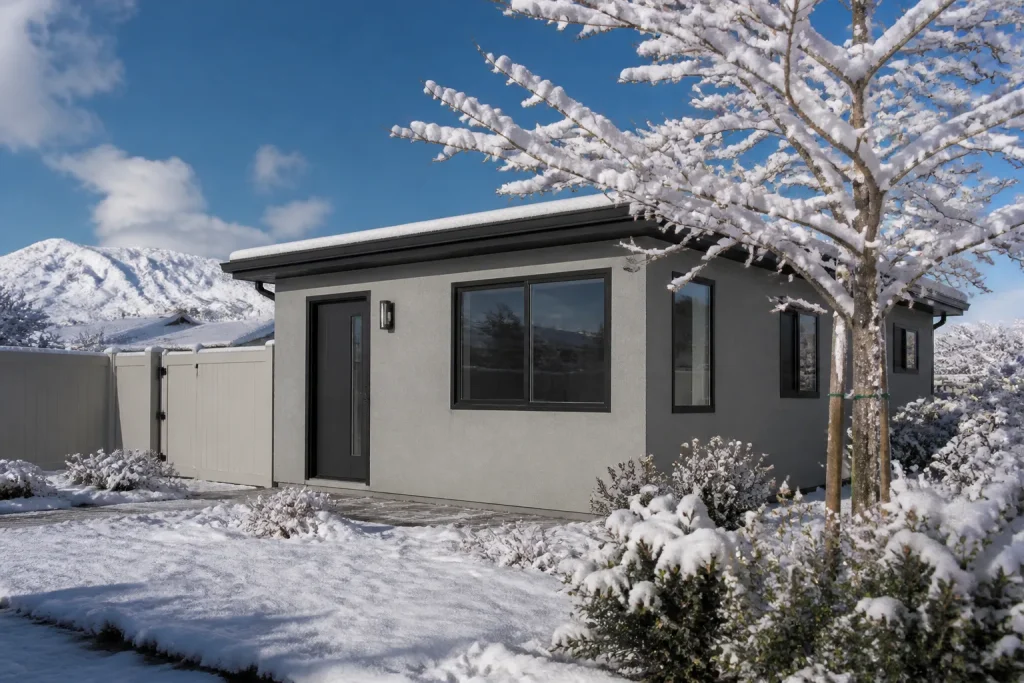
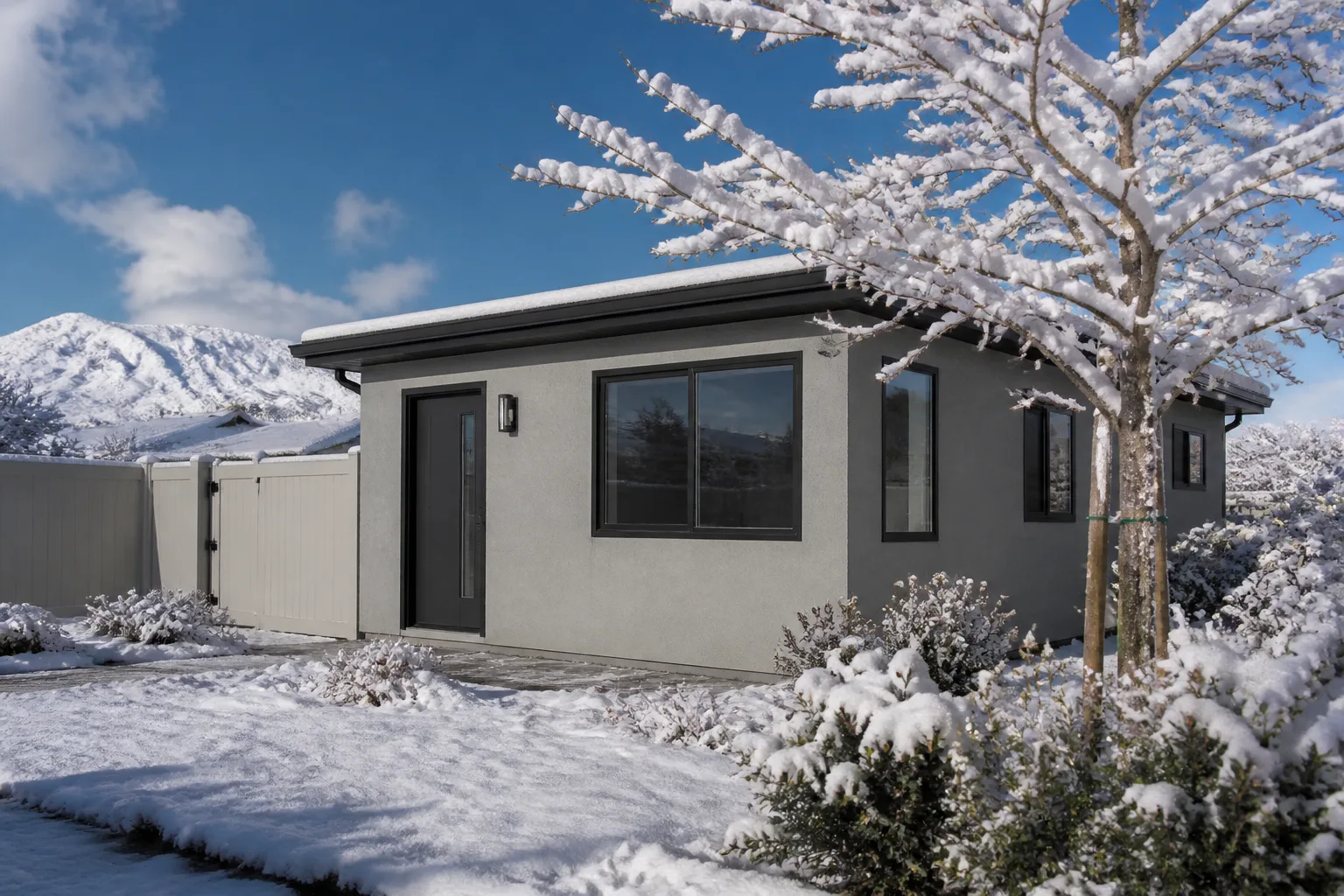
Preparing Your Home’s ADU for Winter in Sunrise Manor
Sunrise Manor averages only about 20 nights a year below freezing, which is exactly why most ADU owners here skip winterization entirely. But one hard freeze in a compact, separately metered unit with exposed supply lines can do the same water damage as a Minnesota January, because the unit was never prepared for even occasional cold. Add up the three usual suspects – slab edge, recessed lights, and that sliding door threshold – and you’re looking at repair bills in January for problems that cost almost nothing to prevent in November. If you’d rather not crawl around the unit yourself, call (888) 419-5282 and we’ll walk it with you.
The mild climate is the trap. The desert doesn’t announce winter the way colder regions do. There’s no long ramp of dropping temperatures that gets you thinking about pipes. It’s 78 degrees on a Tuesday, then a cold front drops the low to 27 on Thursday, and whatever was exposed stays exposed. In our experience, the ADUs that get hurt aren’t the poorly built ones. They’re the ones that were totally fine on every other night of the year.
Key Takeaways
- An ADU in Sunrise Manor isn’t a smaller version of the main house. It’s a separate building with its own vulnerabilities.
- Heat loss concentrates in three predictable places: slab edge, recessed light penetrations, and sliding door thresholds.
- Separately metered ADUs often get heating sized for a main-house addition of the same square footage, which runs cold on the coldest nights.
- A November walkthrough takes under an hour and catches most of what a hard freeze would expose.
Where an ADU in Sunrise Manor Loses Heat First
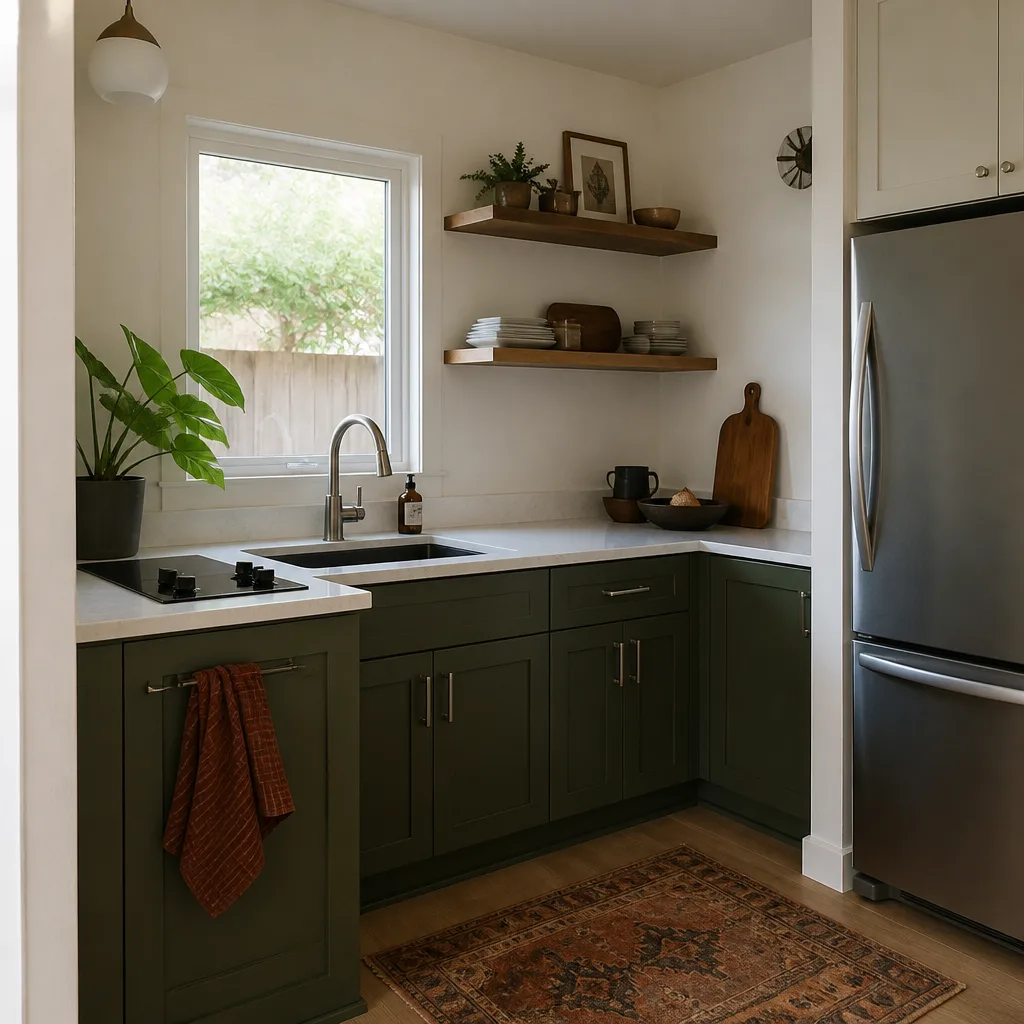
The three places where an ADU loses the most heat in Sunrise Manor are the slab edge, the recessed lighting penetrations, and the sliding door threshold. Each one is a known weak point in compact, detached construction, and each one has a reasonably simple fix. Address these and you eliminate most of the cold-night surprises people call us about.
Start with the slab edge. A detached ADU is usually poured on its own slab, and the perimeter of that slab is where cold air meets warm floor. An uninsulated or under-insulated slab edge pulls heat straight out of the unit, and the floor near the walls stays cold even when the heater says the room is at temperature. Foam insulation around the exterior base, if it isn’t already there, changes how the whole room feels.
Next, recessed lighting. Every can light in a ceiling is a hole cut through the drywall and sometimes through the insulation above it. In a compact Sunrise Manor ADU where the ceiling is often the only barrier between warm air and a cool attic, those holes matter more than they would in a larger home. Sealed, insulated can lights, or a simple gasket retrofit on existing ones, close the gap.
Then the sliding door threshold. Sliding doors are great for a small unit and terrible for air sealing, because the track and threshold are rarely as tight as a swinging door. A cold night in Sunrise Manor will find every gap under that track. Weatherstripping and a threshold seal are cheap and effective.
- Slab edge: Check for exterior foam or a thermal break; add insulation if absent.
- Recessed lights: Use insulated, gasketed cans, or retrofit gaskets on existing fixtures.
- Sliding door threshold: Weatherstripping and a threshold sweep, replaced every few years.
Why a Separately Metered ADU’s Heat Needs Different Sizing
A separately metered ADU should have its heating system sized for its own envelope, not for its square footage compared to a main-house addition. This is the single biggest reason Sunrise Manor ADUs run cold in January. When a unit is designed on a “this much per square foot” basis pulled from the main house, it ignores that the ADU is a standalone box with more exposed wall, its own roof, and a separate slab.
Think about what’s actually different. A 600-square-foot addition shares three walls and a roof with a heated house. A 600-square-foot detached ADU in Sunrise Manor shares nothing. It has four exterior walls, its own roof, its own slab, and its own air leakage. Its heat load is meaningfully higher than the same square footage of addition, which is why units built with the wrong sizing baseline feel fine in November and struggle in a cold snap.
If you’re building new, this is a conversation to have before construction, and it’s one worth having with whoever is pouring the slab. Prefab and modular units from brands like Mighty Buildings or Plant Prefab can often be ordered with climate packages matched to the local design temperature, which is more accurate than any square-foot rule of thumb. If you already have an ADU that runs cold, a manual load calculation from a mechanical contractor will tell you whether the system is undersized or whether the losses are all in the envelope. Usually it’s the envelope first.
What you don’t want is to cover the symptom. A bigger heater in a leaky unit just runs longer and costs more every month. Seal the envelope, then check the sizing.
Where Pipes Freeze in a Desert ADU
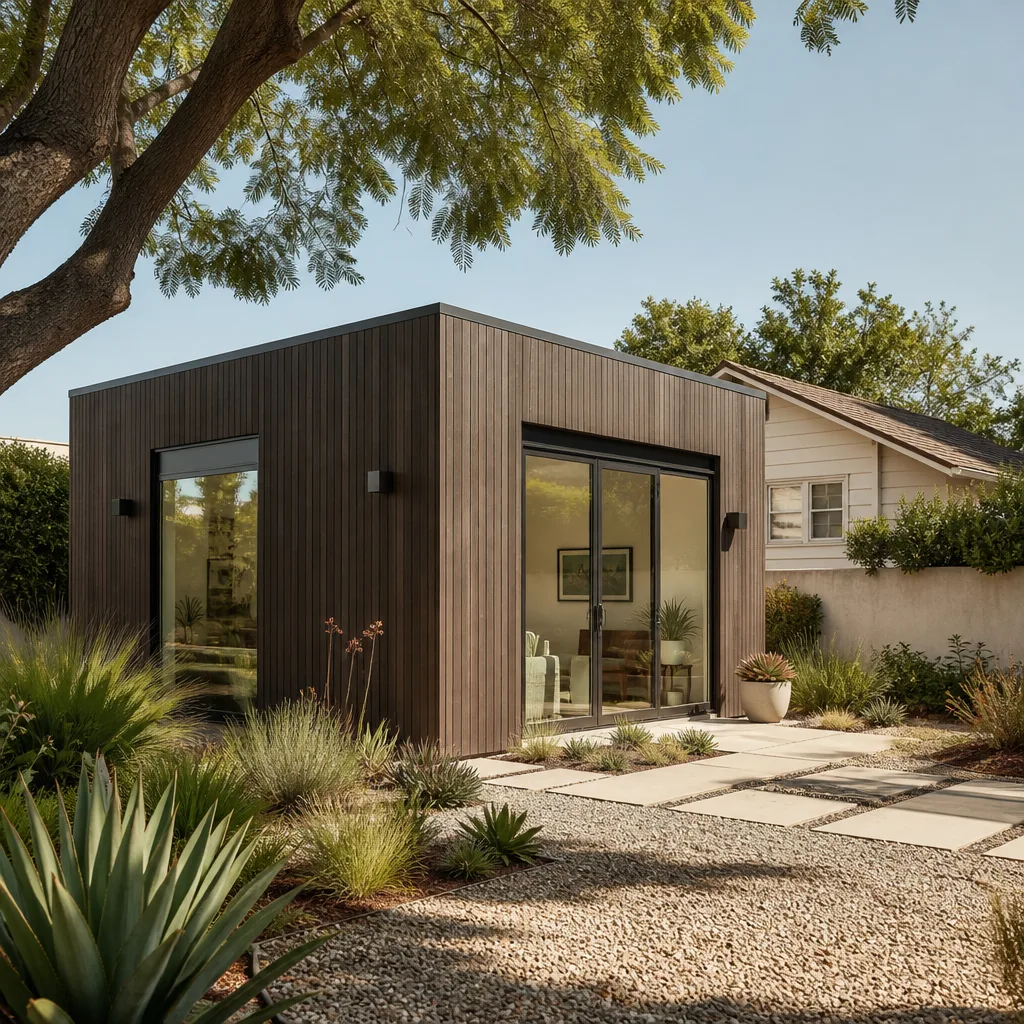
Pipe freeze risk in a Sunrise Manor ADU comes down to where the supply lines run. PEX is standard in modern ADU construction, and in a desert climate the insulation around those runs is often thinner than it would be in a colder region, because the code baseline is lower. The pipes that fail first aren’t the ones in heated space. They’re the ones that are exposed to outside air.
Walk the unit and look for these specific points:
- Under the slab or in a crawl space: Any supply line that runs through unconditioned ground or a vented crawl space needs insulation rated for the exposure.
- Along exterior walls: Pipes run inside an exterior wall are more vulnerable than pipes run in an interior one, especially near a corner where the wall meets the slab.
- Attic and ceiling runs: A line routed through an unconditioned attic is at risk on any Sunrise Manor night near freezing.
- Anywhere near a hose bib or exterior faucet: The interior valve feeding an exterior spigot is a classic freeze point.
- Under a sink on an exterior wall: Kitchen and bath sinks on exterior walls expose the supply lines to the wall cavity temperature.
Foam pipe insulation on exposed runs is a cheap and effective step. For anything near an exterior wall, a heat trace cable on the most vulnerable segment is worth considering if you’ve had trouble before. Don’t open walls to do this yourself; have a licensed plumber identify the runs and specify the fix. We’ve walked units where the only pipe exposed to the cold was behind a kitchen cabinet on the north wall, and the homeowner had no idea it was there until it froze.
Related services in Sunrise Manor: our ADU Builders in Sunrise Manor page covers what an enclosure needs to look like from the start, and our Garage Conversion Contractor in Sunrise Manor page covers the pipe routing that matters most in a converted garage.
The November Walkthrough Checklist
A November walkthrough in your Sunrise Manor ADU takes under an hour and catches most of what a hard freeze would otherwise reveal. Do it on a cool morning if you can, so you feel the drafts. Here’s what we’d check, in order.
- Door and window seals: Run a hand along every frame. Feel for air. Pay extra attention to the sliding door threshold.
- Recessed lights: Count them. If they’re older cans in an insulated ceiling, they’re a leak. Note the count and have a pro retrofit them.
- Under-sink cabinets: Open the cabinets on exterior walls. Are the supply lines insulated? Are there gaps in the wall behind the cabinet?
- Pipe insulation: Follow every exposed line. Anything in a crawl space, attic, or along an exterior wall should be insulated.
- Exterior faucets: Disconnect hoses. Shut off any interior valve feeding an exterior spigot if you won’t use it until spring.
- Slab floor near walls: On a cold morning, feel the floor near the exterior walls. If it’s noticeably cold, the slab edge is where you should focus.
- Heating check: Run the heater through a full cycle. If it struggles to hold temperature on a cool morning, that’s a sizing or envelope signal, not a thermostat problem.
- Roof and gutters: Clear any debris. Desert rain plus a wind-driven cold front can find its way under flashing.
Write it down and keep the notes. Next November, the same walkthrough is faster and shows you what held and what didn’t.
When to Call a Pro, and What Your Warranty Covers
Some of this is a homeowner task and some is not. Know which is which before the cold arrives, because the answer changes who pays. Check your original construction contract and your warranty documents for the language on envelope, insulation, and pipe insulation. ADU contracts vary widely, and the same paragraph in two bids can mean two different things.
Generally, the split looks like this:
- Builder responsibility (typically): Pipe insulation specified in the plans but not installed, gaps in insulation at the slab or ceiling, and any envelope detail that was supposed to be sealed and visibly isn’t. These are construction defects, and they’re the kind of thing a warranty should cover.
- Homeowner maintenance (typically): Worn weatherstripping, a sliding door threshold that was fine at handoff and now isn’t, and any component the warranty lists as owner-maintained. These age out.
If you’re not sure which side a gap falls on, that’s the moment to call a pro. A licensed contractor can look at the unit and tell you whether it’s a defect or maintenance. Our work is covered by the 365-Day Done Right Promise, and if something we built isn’t right, we make it right. That’s true of every ADU, garage conversion, and home addition we build. If you’re in Sunrise Manor and want a free estimate on new construction or an addition, our Home Addition Contractor in Sunrise Manor page is the place to start, and you can see our full range of work on the Seedling ADU Builders Sunrise Manor home page.
The Bottom Line
Sunrise Manor’s mild winter is the reason most ADU owners skip preparation, and it’s the reason a single hard freeze causes outsize damage when it comes. The fix is short and specific. Seal the slab edge, close the recessed light penetrations, tighten the sliding door threshold, and insulate every exposed pipe run. Then check your warranty to make sure you know which gaps were the builder’s job and which are yours. We’ve done this walkthrough on units across the east side, and the difference between a well-prepared ADU and one that’s never been touched is measured in weeks of drying time in January.
If you’re in Sunrise Manor and need help, Seedling ADU Builders Sunrise Manor offers free estimates – call (888) 419-5282. We’ll walk the unit, tell you what’s a maintenance item versus a construction issue, and give you a written price before any work begins. Our technicians have up to 25 years of experience, and every job is backed by the 365-Day Done Right Promise.
Frequently Asked Questions
How often should I winterize my ADU in Sunrise Manor?
Once a year, in November, before the first hard freeze. Sunrise Manor averages about 20 nights a year below freezing, so the risk window is narrow but real. A once-a-year walkthrough covering door seals, slab edge, recessed lights, and exposed pipe runs is enough for most ADUs. Call (888) 419-5282 for an exact quote if you’d like a pro to do the walkthrough – estimates are free.
Will my ADU warranty cover winterization gaps?
It depends on whether the gap is a construction defect or a maintenance item. Pipe insulation that was specified but not installed is usually a builder responsibility. Worn weatherstripping is usually a homeowner maintenance item. Read the envelope and mechanical sections of your warranty before the cold arrives. If you’re not sure which side a gap falls on, call (888) 419-5282 and we’ll take a look.
Why does my separately metered ADU run colder than my main house?
Because it’s a standalone building with four exposed walls, its own roof, and its own slab, so its heat load is higher than an addition of the same square footage. The system may also have been sized on a square-foot basis that doesn’t account for the envelope. The fix is usually to seal the envelope first, then check the sizing. Call (888) 419-5282 for an exact quote on an assessment.
Do I need to drain the pipes in my Sunrise Manor ADU if I won’t use it in winter?
Not necessarily, because the climate rarely stays below freezing long enough to threaten the whole system. But if the unit will sit empty through a cold front, shutting off the supply and draining the lines is the safest option. A licensed plumber should handle any drain-down that requires opening walls. Call (888) 419-5282 for an exact quote – estimates are free.
Written by the team at Seedling ADU Builders Sunrise Manor.
Need ADU Help?
Call Seedling ADU Builders Sunrise Manor - licensed & insured, here with fast after-hours help in Sunrise Manor.
(888) 419-5282