Last updated November 18, 2026
DIY vs Professional ADU: The Sunrise Manor Homeowner’s Decision Guide
Nevada lets homeowners pull their own building permits as an owner-builder. That single fact fuels most of the DIY ADU content you’ll find online, and it’s why so many Sunrise Manor homeowners start sketching a backyard cottage on a legal pad. Here’s what that content usually leaves out: Clark County requires an owner-builder to occupy the new structure as a primary residence for 12 months after it’s finished, and selling inside that window can trigger penalties that surface at escrow. This guide walks through the real decision – permit access, liability, trade licensing, resale disclosure, and a Sunrise Manor cost comparison – so you can choose with your eyes open.
Quick Answer
For most Sunrise Manor households, building an ADU through a licensed general contractor is the safer path because the owner-builder permit carries a 12-month primary-residence requirement, ties you personally to liability, and leaves you responsible for every licensed trade (electrical, plumbing, structural) that Nevada won’t let an owner-builder perform on their own. DIY can work only if you plan to live in the unit yourself, can manage subcontractors and inspections, and aren’t selling soon. If you intend to rent the ADU or move within a few years, hire a professional.
Table of Contents
- What Nevada’s Owner-Builder Permit Actually Requires
- The Trades Nevada Won’t Let You Do Yourself
- How a Self-Permitted ADU Shows Up in a Title Search
- Real Cost Comparison: Professional vs Owner-Builder in Sunrise Manor
- What “Hybrid” Builds Look Like – and What You Can Legitimately DIY
- Sunrise Manor Climate and Lot Realities That Affect an ADU
- Prefab and Modular Options and Which Approach Fits
- A Numbered Walkthrough of the Professional Path
What Nevada’s Owner-Builder Permit Actually Requires
Nevada’s owner-builder provision isn’t a loophole – it’s a tightly bounded exception for people building a home they’ll personally live in. When you sign as an owner-builder in Clark County, you’re attesting that you’ll occupy the structure as your primary residence for at least 12 months after the certificate of occupancy. That clause is the whole ballgame, and it’s the one DIY ADU blogs written for California or Texas readers almost never mention.
Here’s what the requirement means in practice for a Sunrise Manor homeowner:
- If you plan to rent the ADU, the owner-builder path is generally off the table for that use. The structure is meant for you to live in, not for a tenant.
- If you plan to sell within a year, you’re exposed. A sale inside the 12-month window can invite scrutiny, penalties, or a buyer’s lender balking at closing.
- If your situation changes – a job move, a family shift – you don’t get to switch the permit’s intent after the fact. The attestation was made on paper.
For homeowners in Sunrise Manor’s established neighborhoods who are building an ADU for aging parents or adult children, the owner-builder model can genuinely fit the letter of the rule. But “can” isn’t the same as “should,” and it’s worth being honest about which category you’re in before you pull the paperwork.
The Trades Nevada Won’t Let You Do Yourself
Even with an owner-builder general permit, Nevada requires licensed contractors for several scopes of work. The owner-builder exception covers the general construction role – it does not license you to run electrical circuits, sweat plumbing lines, or engineer structural load paths. That distinction catches DIYers off guard.
The trades that typically require a licensed professional regardless of your owner-builder status:
- Electrical. Panel work, new circuits, service upgrades, and anything touching the grid need a licensed electrician. This is also where the highest life-safety risk sits; mistakes here start fires and void insurance coverage.
- Plumbing. Water and sewer connections, gas lines, and anything tied to the municipal system require a licensed plumber. Gas in particular is non-negotiable.
- Structural. Engineered components – shear walls, foundation anchoring, roof framing tied to a stamped plan – generally require licensed and often engineered sign-off.
- HVAC. Mechanical permits for a mini-split or full system typically require a licensed mechanical contractor.
When clients ask us how much of an ADU they can “self-perform” as an owner-builder, the honest answer is: the framing, drywall, finish carpentry, and general labor – not the licensed trades. That reality narrows the DIY savings significantly. If you’re not licensed in those trades yourself, you’re hiring them out anyway, which means the owner-builder path is really about managing subs and inspections rather than building the unit. That’s a project management job many homeowners don’t fully price in until they’re three months in.
Our technicians have up to 25 years of experience across these trades, and the pattern is consistent: the trades a homeowner assumes they’ll “figure out” are the ones that fail inspection and cost the most to redo. For anyone weighing the tradeoff, our ADU Builders in Sunrise Manor guide covers how we structure the licensed-trade portion of a build.
How a Self-Permitted ADU Shows Up in a Title Search
This is where the DIY-versus-professional question gets real, and where most homeowners first feel the consequences – at the closing table. When a buyer’s title company runs its search on a Sunrise Manor property with an ADU, what they find matters enormously: a permitted ADU with a certificate of occupancy, an owner-builder permit with a recorded 12-month occupancy covenant, or no permit at all.
Each of those outcomes has a different downstream effect:
- Permitted with clean C of O: The unit counts toward appraised value, the buyer’s lender is comfortable, and no one needs a special exception to close.
- Owner-builder permit with recorded covenant: Buyers and lenders may require additional diligence to confirm the occupancy requirement was met. If the covenant is still active, a sale inside the window can stall.
- Unpermitted: Buyers often demand a price concession, a retroactive permit, or a holdback. Some lenders won’t finance a property with an unpermitted dwelling at all.
What we’ve seen in Sunrise Manor is that buyers’ agents increasingly ask for permit history up front, not at the eleventh hour. That means a self-permitted ADU you intended to sell with later can turn into a disclosure headache you spend months resolving. The cleanest way to protect your resale position is to build with a contractor who pulls permits and passes inspections from day one, which is what our Garage Conversion Contractor in Sunrise Manor work is built around for homeowners converting existing garage space.
Real Cost Comparison: Professional vs Owner-Builder in Sunrise Manor
Let’s put numbers on the table, because the DIY math is where the rosy online assumptions break down. A professionally built ADU in Sunrise Manor typically lands in a range based on size, finish level, and site conditions, and the owner-builder path looks cheaper on paper only until you add the pieces DIY blogs leave out.
Here’s a line-item comparison using Sunrise Manor-typical numbers:
- Licensed general contractor, full build (detached 500-750 sq ft): roughly $140,000-$260,000 turnkey, including permits, licensed trades, inspections, and a workmanship warranty.
- Owner-builder material cost: roughly $85,000-$150,000 for the same footprint, excluding labor.
- Licensed trade subcontractors (electrical, plumbing, mechanical, structural): roughly $35,000-$55,000 – you’re paying these either way.
- Permit fees and plan review: typically $4,000-$9,000 whether you or a contractor pulls them.
- Inspection-failure risk and rework: the wildcard. A failed rough-in inspection can add $3,000-$12,000 in demolition, redo, and re-inspection fees – and it happens more than once in most owner-builder builds.
- Your time: 400-800 hours of project management across 8-14 months. If your time is worth anything, that’s real.
Add those up and the owner-builder “savings” often land within 10-15% of a professional build – while you carry the entire schedule, liability, and inspection risk yourself. The gap narrows further when you consider that a professionally built ADU comes with a written price before work starts and a warranty behind the finished product, both of which protect the resale value.
What “Hybrid” Builds Look Like – and What You Can Legitimately DIY
Many Sunrise Manor homeowners don’t want a fully hands-off build; they want to contribute labor where it makes sense. The good news is that a professionally permitted and managed build still leaves plenty of legitimate room for your own hands – as long as you don’t interfere with the licensed scopes or the warranty.
Here’s what a legal hybrid build allows you to do yourself:
- Site prep labor – clearing, moving dirt, and coordinating the lot work before foundation.
- Interior finish work – painting, tile, and trim, done after final inspections or coordinated with your contractor’s schedule.
- Landscaping and hardscape – patios, pathways, planting, and fencing around the finished ADU.
- Fixture selection and staging – sourcing finishes and furnishings, which lowers cost without touching the build envelope.
What you can’t do in a hybrid build without voiding inspections or warranties: alter rough-ins, run electrical or plumbing, modify the framing, or change the plan without re-review. Those lines are firm, and licensing is why. Our Home Addition Contractor in Sunrise Manor page walks through how scopes are split on a managed build so homeowners know exactly where their hands are welcome.
Sunrise Manor Climate and Lot Realities That Affect an ADU
Sunrise Manor’s Mojave Desert setting makes some ADU decisions easier and others harder than the generic national advice suggests. The good news: no snow load concerns, no freeze-thaw foundation movement to speak of, and long buildable seasons. The bad news: summer heat that reaches the 110s and drives HVAC sizing and insulation choice more than any other factor.
Specific Sunrise Manor realities that shape an ADU build:
- Cooling load dominates. Mini-splits need careful sizing; undersized units fail in July, oversized units short-cycle and waste energy. Licensed mechanical contractors matter here.
- Solar-ready roofs make sense. The sun exposure that makes cooling a challenge also makes solar an easy win on a new ADU. Factor it into the plan, not after the roof is closed.
- Lot orientation drives design. East-west facing ADUs bake in the afternoon; north-south placements run cooler. A good designer accounts for this before you submit plans.
- Drainage and flooding. Monsoon-season runoff across Sunrise Manor’s flat lots needs to be graded for, not wished away. Foundation drainage mistakes surface after the first big storm.
- Alley access. Some Sunrise Manor parcels back onto alleys, which can simplify or complicate equipment access depending on the build method.
The practical takeaway: local design decisions – cooling, orientation, drainage – are the ones that cause the most expensive post-build corrections. Homeowners who self-manage an ADU build often don’t see these issues until the unit is in use.
Prefab and Modular Options and Which Approach Fits
Prefab and modular ADUs have reshaped the cost and speed curve considerably in recent years, and they’re worth considering whether you go DIY or professional. Prefab units from Dvele, Mighty Buildings, Plant Prefab, and Boxabl arrive substantially factory-built, which dramatically reduces the on-site labor and inspection surface – the parts of a build where owner-builders historically lose money and time.
How prefab changes the DIY math:
- Site work is still yours (or your contractor’s). Foundation, utility trenches, and hookups are the same no matter how the unit arrives.
- Factory inspections are baked in. Prefab units come with their own quality control, which reduces the number of field inspections that can fail.
- Delivery and set is licensed. Crane placement and final utility connections still require licensed trades on site.
- Design flexibility is narrower. Prefab limits customization, which some families love and others find constraining.
In our experience, prefab is where hybrid becomes most viable: homeowners can realistically manage the site prep and finish work while the manufacturer handles the shell. That said, the module still needs to land on a permitted foundation, hook up to permitted utilities, and pass final inspection – so the permit path doesn’t vanish, it just narrows. If you’re exploring prefab, our Seedling ADU Builders Sunrise Manor home page lays out which brands we work with and how we structure the site-side scope.
A Numbered Walkthrough of the Professional Path
For Sunrise Manor homeowners leaning toward a professionally built ADU, here’s the sequence we walk families through. Each step has a decision point where a DIY build would have to pause and hire in anyway.
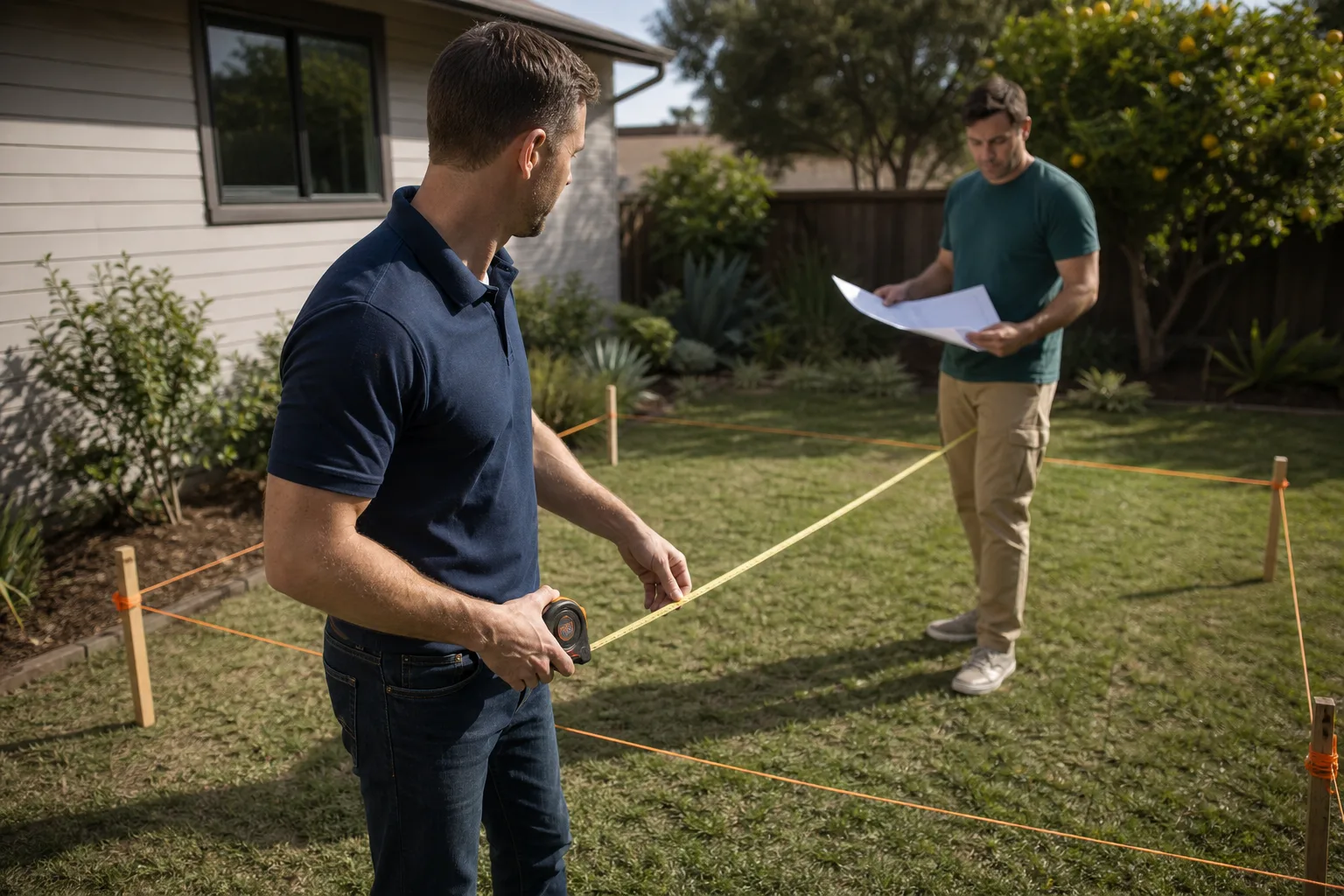
- Feasibility and lot check. Confirm zoning, setbacks, existing easements, and utility capacity for your specific Sunrise Manor parcel. This is where good projects are scoped and bad ones are caught early.
- Design and plan submittal. Drawings stamped and submitted to Clark County. This step also determines whether your ADU can be detached, attached, or a conversion.
- Written price before work starts. Every family receives a written price before any work begins, with no surprise line items added after crews arrive. This is where the real number replaces the estimate.
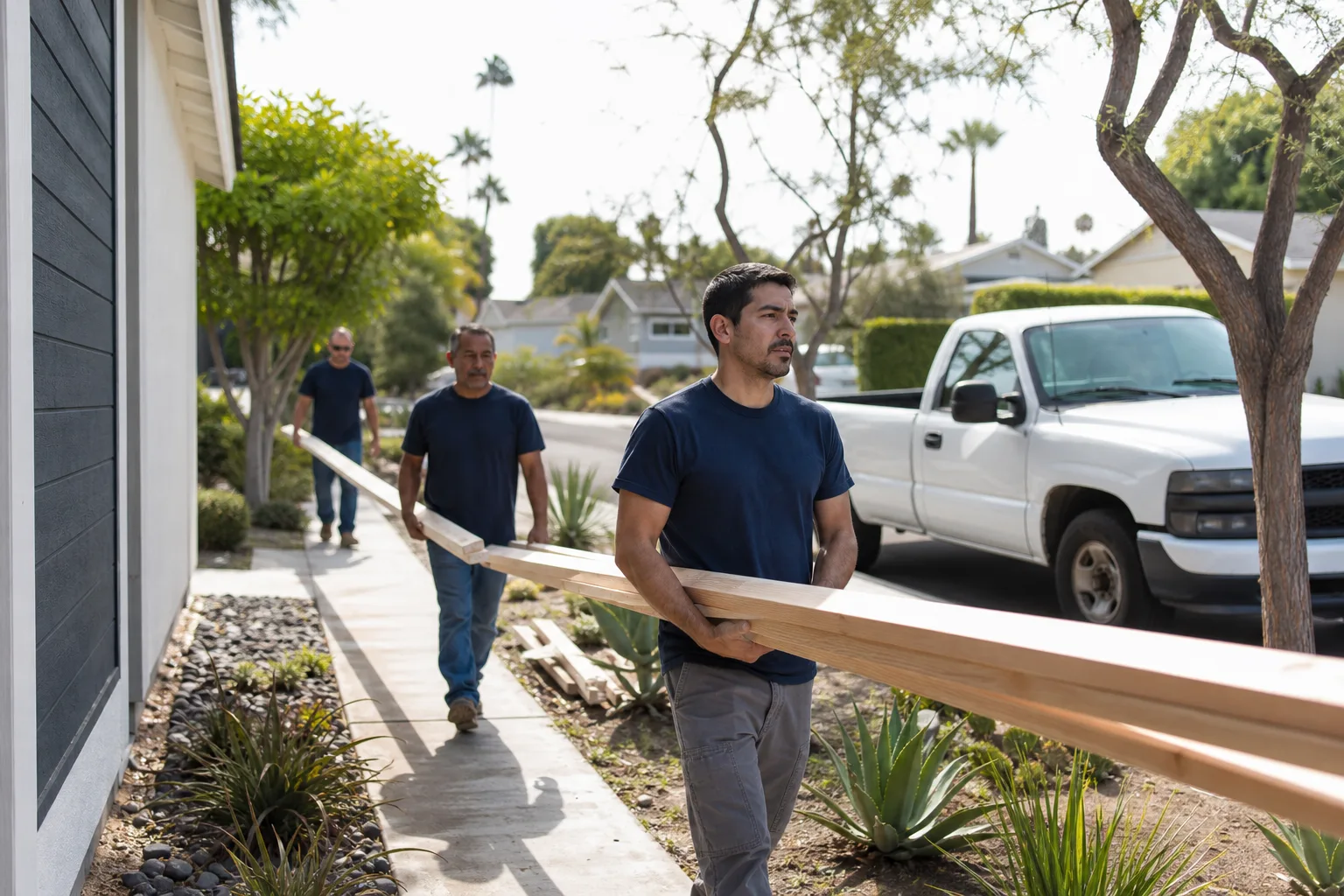
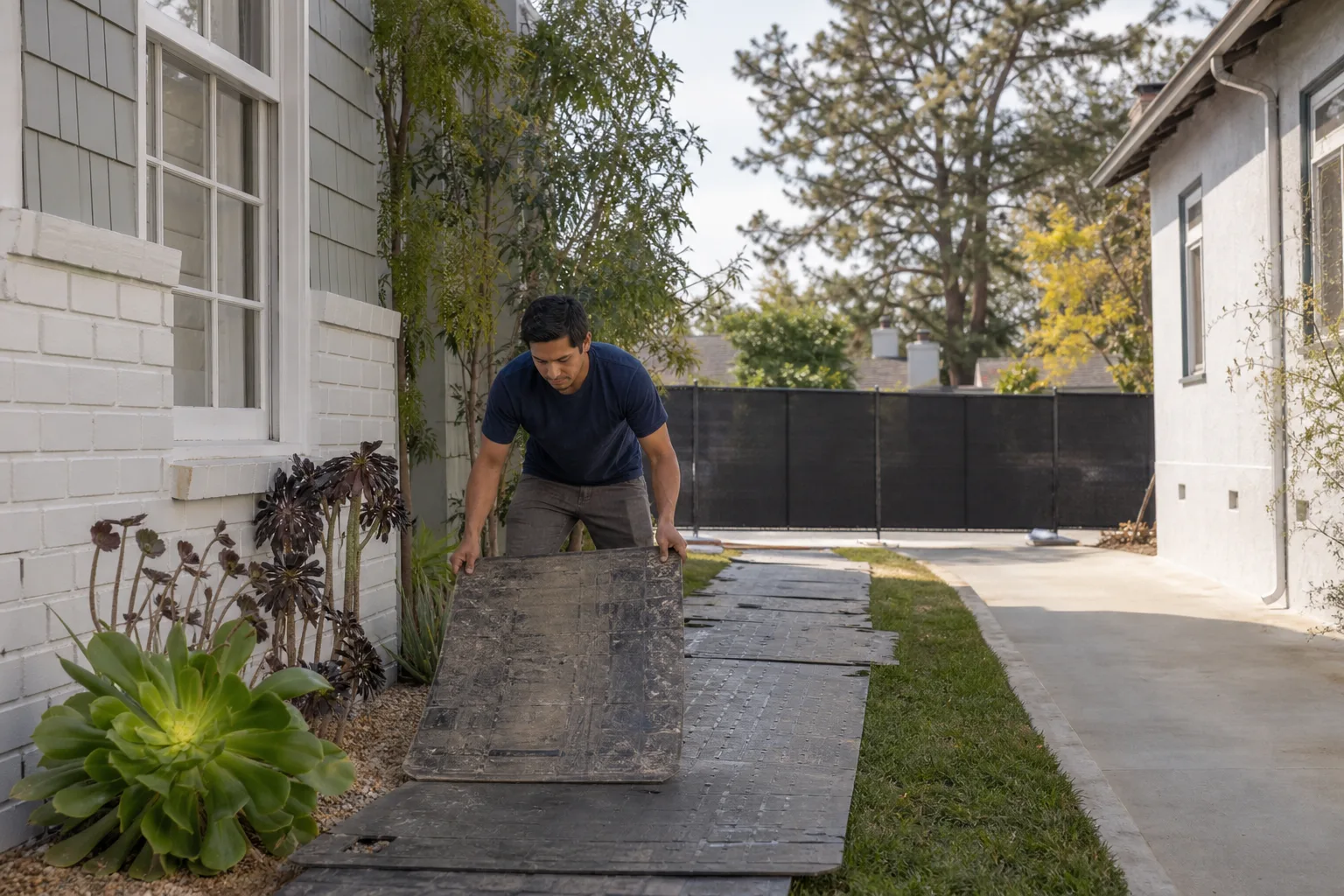
- Permit issuance and pre-construction. Permits issued, schedule set, materials locked, and the crew’s access to your property confirmed – including how we’ll protect floors, pets, and kids’ schedules inside the home during the build.
- Foundation and shell. The structural build. Site access, clean-up daily, and a photo of the clean-up before the crew leaves.
- Licensed rough-in trades. Electrical, plumbing, mechanical, and structural – all inspected before walls close.
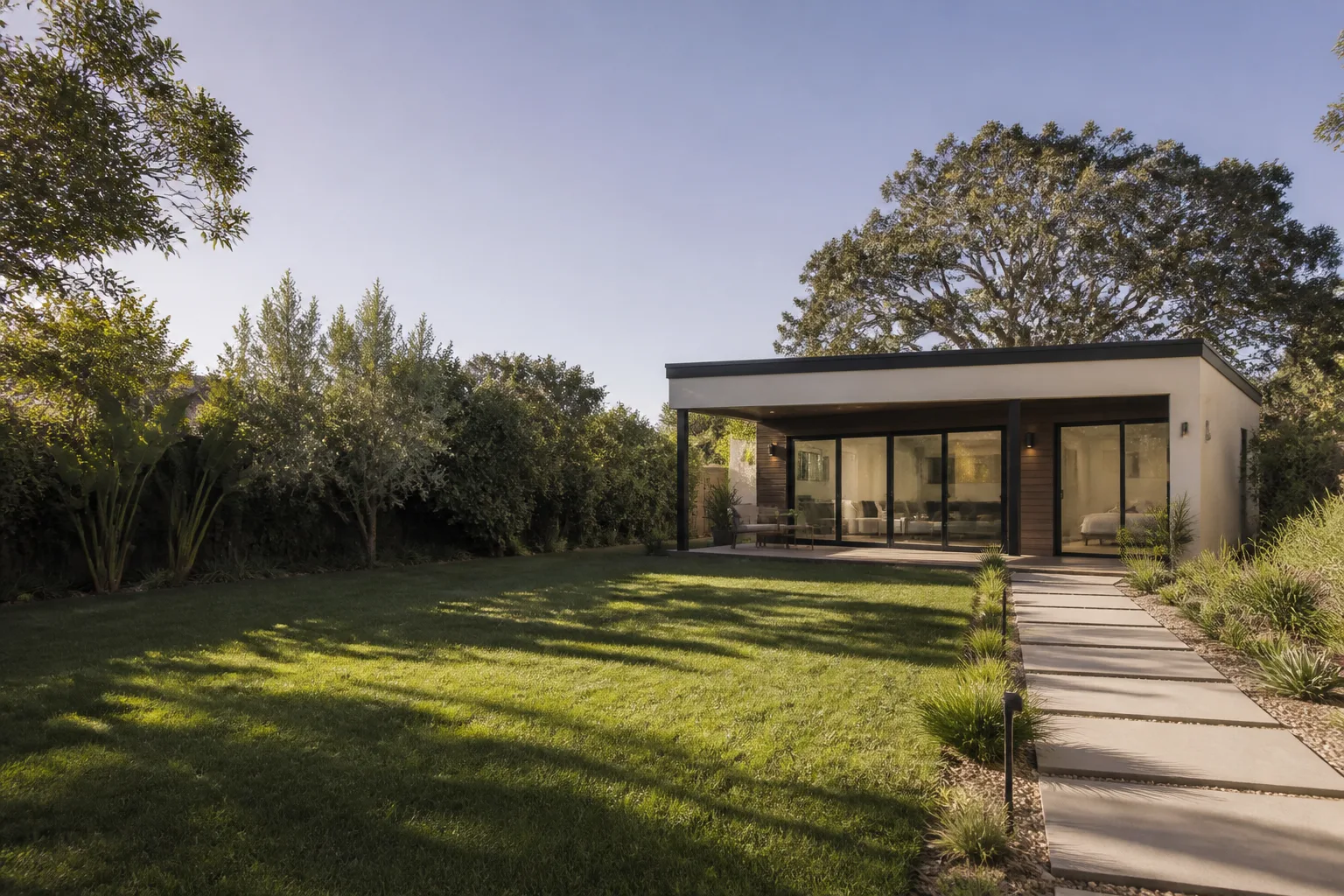
- Interior finish and final inspection. The finish work, final inspection, and certificate of occupancy – the document that protects your resale.
- 365-Day Done Right Promise. After close-out, the unit stays covered. If something isn’t done right, we make it right.
That sequence is less dramatic than the DIY version, and it’s less expensive than the DIY version in most cases once rework is counted. It also gives you a documented paper trail that a future buyer’s lender will accept without a fight.
Common Mistakes to Avoid
- Assuming the owner-builder permit means you can do the whole build. Nevada requires licensed electrical, plumbing, mechanical, and structural work regardless of your general permit. Budget for those trades or you’ll discover them mid-build.
- Planning to rent an owner-builder ADU. The 12-month primary-residence requirement generally precludes rental use. Check this before you draw plans.
- Selling too soon. A sale inside the occupancy window can slow the closing, invite lender scrutiny, or trigger penalties. If a move is possible in the next two years, plan for it.
- Skipping the permit because “everyone does it” in the neighborhood. Unpermitted ADUs in Sunrise Manor increasingly show up in title searches at closing, and buyers’ agents are asking earlier. The short-term savings rarely hold.
- Underestimating cooling sizing. Sunrise Manor’s summer heat punishes undersized HVAC. A licensed mechanical contractor sizes the system for the actual orientation and insulation – not the generic square-footage rule.
- Ignoring drainage on flat lots. Monsoon runoff across flat parcels needs grading planned in, not patched after the first storm.
- Repeating a neighbor’s mistake on scope. Every Sunrise Manor lot is different – setbacks, alleys, utility access, and orientation vary block by block. What worked on the next street may not work on yours.
When to Call a Professional
Call a professional if any of these describe you: you plan to rent the ADU; you might sell within a few years; you’re not licensed in electrical, plumbing, mechanical, or structural; you can’t dedicate 400-plus hours to managing a build; or your lot has alley access, drainage quirks, or orientation that makes cooling design tricky. Prefab purchases count too, because the site work and utility hookups still require licensed trades on-site. In each of these cases, the owner-builder path costs more in risk than it saves in schedule. Seedling ADU Builders Sunrise Manor offers free estimates in Sunrise Manor – call (888) 419-5282 to schedule a walkthrough of your lot.
Frequently Asked Questions
Yes – Nevada allows owner-builders to pull their own permits, and Clark County processes them. But the permit carries a 12-month primary-residence requirement after completion, and licensed trades (electrical, plumbing, mechanical, structural) still must be performed by licensed professionals. Pulling your own permit doesn’t license you for those scopes. Call (888) 419-5282 for a free estimate on a professionally permitted build and we’ll walk you through the comparison.
A sale inside the owner-builder occupancy window can slow or derail closing. Buyers’ lenders often want the recorded covenant cleared or the occupancy confirmed, and title searches increasingly surface permit history. The safest approach is to build with a licensed general contractor whose ADU has a clean certificate of occupancy from the start, which avoids the window entirely. Call (888) 419-5282 for a free estimate.
A professionally built detached ADU in Sunrise Manor typically lands around $140,000-$260,000 turnkey, while an owner-builder effort runs roughly $85,000-$150,000 in materials plus $35,000-$55,000 in licensed trades plus $4,000-$9,000 in permit fees plus rework risk. The realistic gap is 10-15%, before you count your time. Call (888) 419-5282 for a free line-item estimate on your specific lot.
Yes. Clark County permit records are public and title companies pull them. Buyers and lenders may require additional diligence, a retroactive permit, or a price concession before closing on a property with an ADU of uncertain permit history. A professionally permitted build with a certificate of occupancy closes cleanly. Call (888) 419-5282 to schedule a free estimate.
Yes, and many Sunrise Manor families do. Legitimate DIY work during a managed build includes site prep, interior finish work like painting and tile, landscaping, and fixture selection. What you can’t do is alter the rough-ins, run electrical or plumbing, change framing, or modify the plan without re-review – all of which would risk inspections and void the warranty. Call (888) 419-5282 for a free estimate and we’ll map out exactly where your hands fit.
Yes. Prefab units still require a permitted foundation, permitted utility hookups, and final inspection on site – only the shell construction is factory-inspected. The permit path narrows but doesn’t disappear, and delivery/set still needs licensed trades. Call (888) 419-5282 for a free estimate that accounts for both the unit and the site work.
The Bottom Line
The DIY-versus-professional question for a Sunrise Manor ADU isn’t really about skill. It’s about permit access, liability, the 12-month owner-builder occupancy rule, and what happens when a self-permitted unit shows up in a title search at resale. Owner-builders in Sunrise Manor face real trade licensing requirements regardless of the general permit, and the realistic cost savings are 10-15% before rework and project management are counted. Professional builds protect the resale, cover the licensed trades, and come with a written price and warranty. For most families building a new home on their lot – whether for parents, kids, or rental income – the professional path is the more certain one.
If your lot is in Sunrise Manor and you’re ready to price a real build, Seedling ADU Builders Sunrise Manor offers free estimates with a written price before any work starts. Call (888) 419-5282 to schedule yours – a live person answers calls 24/7, and you’ll find a background-checked, uniformed crew on every job after that.
Written by the team at Seedling ADU Builders Sunrise Manor.